Product innovation for SMEs: what steps can you take
A good product idea is the start, but not yet a product. Many SME entrepreneurs searching for information on product innovation end up on articles about subsidies, innovation funds and tax schemes.
In brief
- A product idea only becomes a makeable product through a structured trajectory of problem analysis, concept development, engineering, prototyping and production.
- By bringing early engineering, material knowledge and machinability, you avoid costly adjustments and technical problems later in the process.
- Functional prototypes, user tests and pilot production are essential to validate both the product and the production process before scaling up.
- A full service development partner such as PEZY brings together design, engineering, plastic expertise and small-scale production, making the journey more efficient and manageable.
That is valuable information if you are looking for funding, but it does not answer the question most entrepreneurs actually have: how do I get my idea to market? This article is the practical process overview that does answer that. We walk through a complete product innovation trajectory for SMEs step by step, from the first sketch to a manufacturable product.
What is a product innovation trajectory for SMEs and why is it different from a subsidy process
A product innovation trajectory is the set of steps you go through to turn an idea into a physical, producible product. Think problem analysis, design, engineering, prototyping and production. A subsidy process is about something else: arranging financing or tax advantages for the innovation you undertake. Both are relevant, but they do not solve the same problem.
The difference between financing questions and the practical development process
A financing question is all about budget: which scheme suits your project and how do you apply. The practical development process is all about execution: how do you translate an idea into a working, producible product. You can obtain a subsidy and still get stuck because no one on your team knows how to go from a sketch to an injection mould. Conversely, you can have a sharp development process without ever applying for subsidy. So an innovation trajectory for a product is primarily about process and expertise, not about arranging money.
Which SMEs a product innovation trajectory is relevant for
This trajectory is relevant for any SME that wants to develop or improve a physical product: from a start-up with a first prototype idea to an established manufacturer wanting to renew an existing range. Companies that are driven by a technical challenge— for example a component that is too heavy, too expensive or too fragile—also benefit from this step-by-step plan. The common factor is an idea or problem that requires a physical, manufacturable solution.
Step 1: Develop the product idea and conduct problem analysis within your company
Developing a product idea within a company does not start with form or material, but with the problem. What must the product solve, for whom, and under which conditions? Only when that is clear does thinking about appearance or technology make sense.
From a rough sketch to a clear problem statement
Many trajectories start with a rough sketch, an idea on a napkin or a frustration with an existing product. The first step is to turn that intuition into a concrete problem statement: which function must the product fulfil, which requirements are hard and which wishes are negotiable. A sharp problem analysis prevents you discovering later in the project that you actually needed something different.
Involve internal stakeholders early in idea generation
Involve sales, production and customer service early in idea generation. They often know better than anyone which problems customers experience and which practical requirements a product must meet. This internal input prevents a design from appearing logical on paper but not matching how the product is used or maintained in practice. A good problem analysis at this stage saves time later in engineering: you will not have to adjust your starting points halfway through the process.
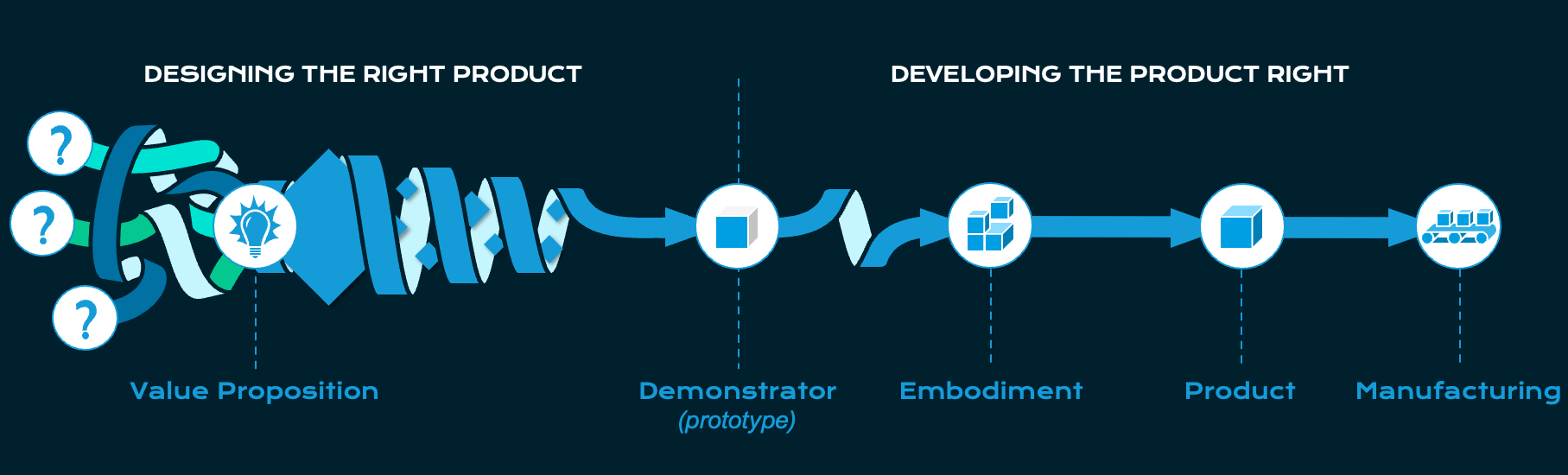
Ons integrale ontwikkeproces
Goede ideeën zijn er genoeg. Succes zit in het vroeg ontwerpen van het juiste product en het daarna ontwikkelen van het product op een manier die betrouwbaar en schaalbaar is. Wij werken integraal, met één team en een lean proces, zodat we sneller leren, risico’s vroeg zichtbaar maken en beslissingen beter onderbouwen. Zo verklein je late wijzigingen, voorkom je kostbare iteraties en maak je de stap naar productie haalbaar, voorspelbaar en beheersbaar.
Step 2: Concept development and industrial design
Once the problem is clear, the concept development phase begins. Here the first visual and functional directions for the product emerge.
Sketches, moodboards and first 3D concepts
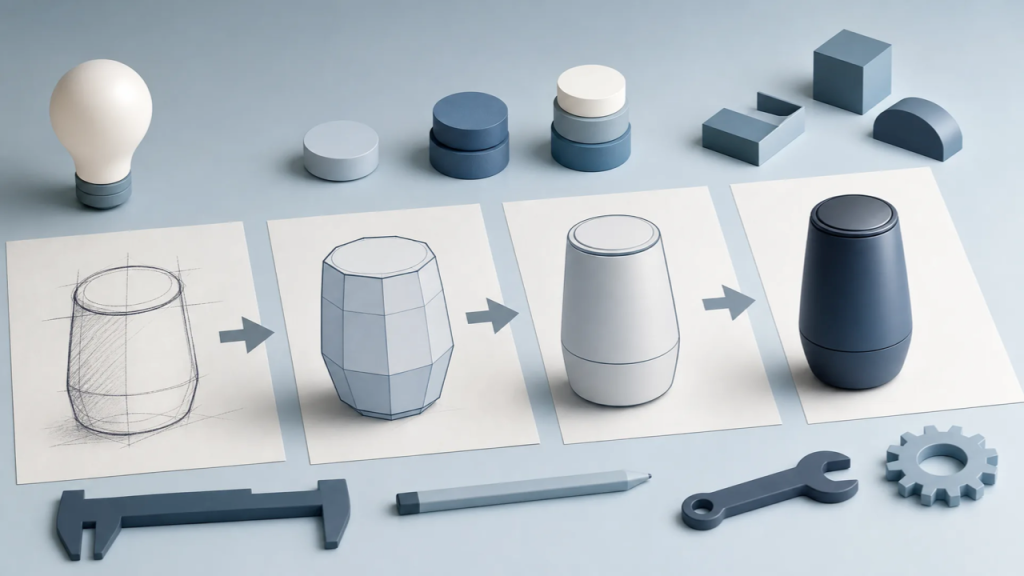
Industrial design typically generates multiple concept directions at once, from hand sketches and moodboards to first 3D models. These concepts are tested for usability, fit with brand identity and technical feasibility. By laying different directions side by side, you can make substantiated choices early in the process instead of sailing by the first idea.
Balancing aesthetics, usability and engineering
A good concept looks appealing, is pleasant to use and can be realised technically. An experienced development partner already takes production techniques into account at this stage, so a beautiful concept does not later fail because it simply cannot be made. That early alignment between design and manufacturability is precisely where many independent design studios go less far than a party that also produces itself.
Step 3: Technical feasibility and engineering for SME product development
An attractive concept is only valuable if it can actually be built. Therefore, a thorough technical review follows concept development.
Design-for-manufacturing as an early check
Design-for-manufacturing means testing a design for production suitability during development, rather than only at the production stage. This early check within SME product development in the Netherlands prevents you discovering at the mould or tooling stage that a form is unachievable or walls are designed too thin. Engineers look at strength, assembly, tolerances and the chosen production method.
Material selection and plastic expertise in the design phase
Material choice greatly determines the cost, strength and lifetime of a product. For plastics this is particularly important: the type of plastic influences not only the properties of the final product, but also which production method is logical and at what cost. A development partner with plastics expertise brings this trade-off into the design phase, so you do not encounter surprises afterwards. In practice, many product innovations at SMEs stall not because of a lack of ideas but because of the absence of technical manufacturability knowledge in an early stage. Early involvement of engineering and material knowledge prevents costly redesigns later in the process.
Step 4: Prototyping and testing before you produce
Before you invest in moulds and production lines, you want to know whether your assumptions are correct. That is where prototyping comes in.
Functional prototypes versus presentation models
A presentation model shows what a product looks like, but says little about how it functions. A functional prototype tests the operation: does the mechanism fit, does the material hold up, does the construction work as intended. Both types have their place in the process, but for a manufacturable end product the functional prototype is indispensable.
Iterate based on user tests and technical validation
Prototypes are tested with users and technically validated, after which the design is adjusted. This is an iterative process: it is normal to go through multiple rounds before a design is ready for production. Many SMEs underestimate this part of the trajectory and allocate too little time and budget for these iteration cycles. It is precisely here that many later problems are prevented.
Step 5: From pilot production to scaling in small batches
When the prototype is validated, full series production does not follow immediately. First production is carried out on a small scale.
Why small-scale production takes place first
A pilot batch serves to validate the production process itself: does the chosen method work as expected, is quality consistent and do the lead times match. Small-scale production is thus a deliberate intermediate step towards full series production, reducing risks before you make large investments in moulds, machines or inventory. For SMEs with limited capital this is often the difference between a manageable project and an expensive failure.
Quality control and preparing for serial production
During the pilot phase quality control is set up: which checkpoints are needed, which tolerances apply and how are deviations detected. This phase lays the foundation for a stable production process when you scale to larger volumes, and prevents quality issues only becoming visible when you already run at full capacity.
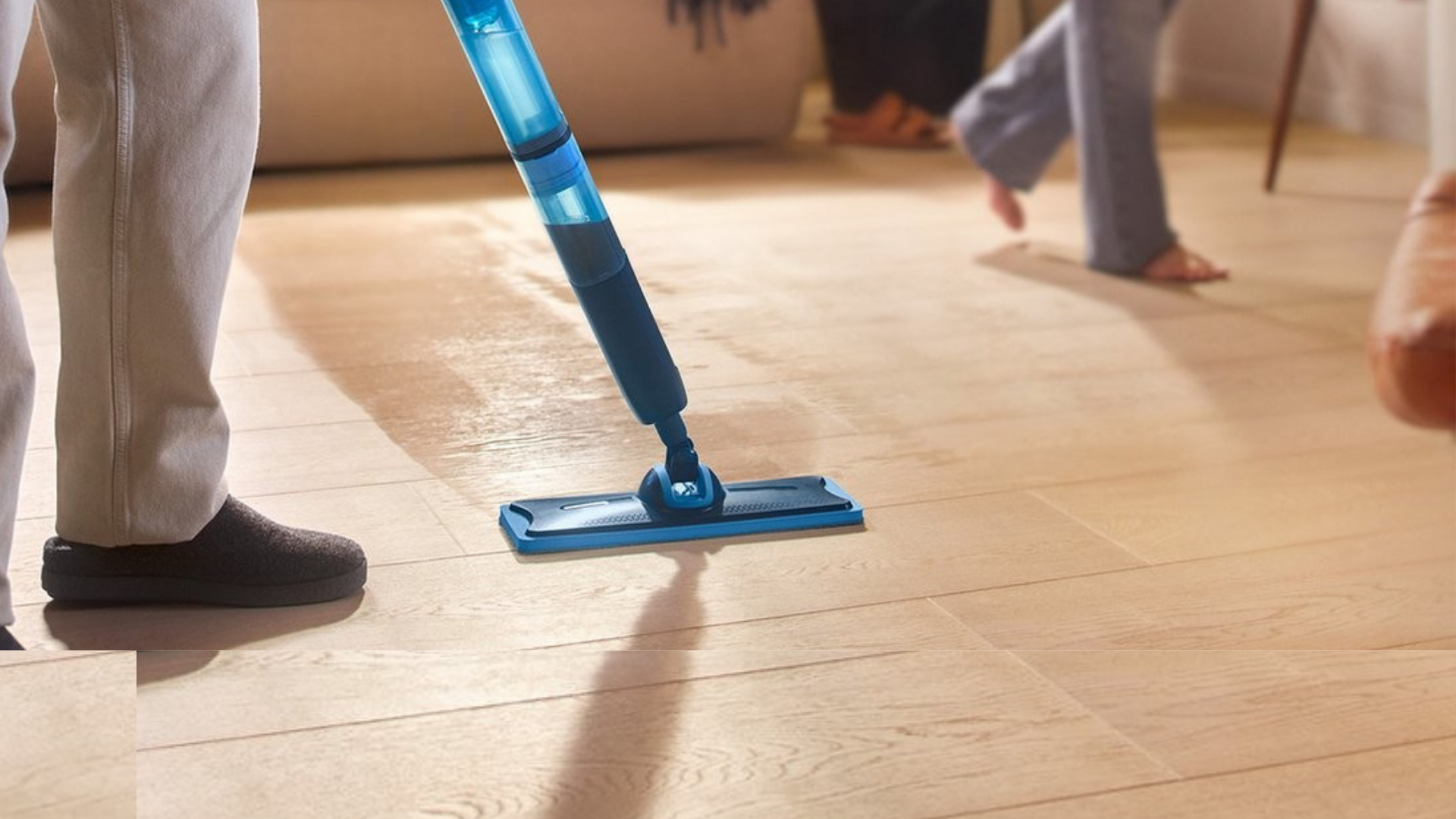
Case: Philips OneUp
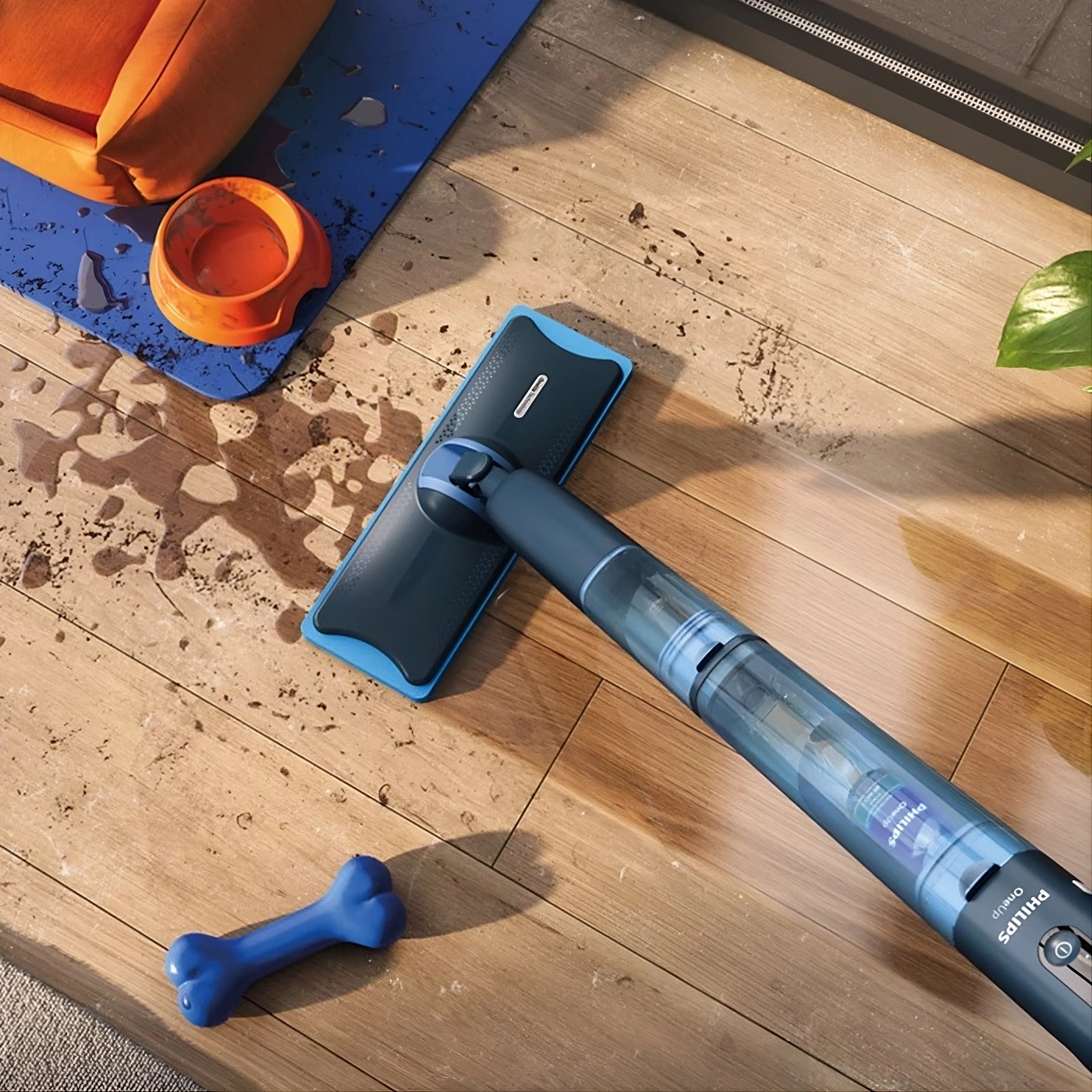
Bij de ontwikkeling van een nieuwe generatie vloerreinigers had Philips een duidelijke ambitie: een elektronische dweil die sneller schoonmaakt en gebruiksvriendelijker is dan bestaande oplossingen.
In de praktijk bleek de uitdaging groter. Traditionele dweilen werken met een emmer en hergebruiken hetzelfde water, waardoor vuil zich over de vloer kan verspreiden. Elektrische vloerreinigers lossen dat deels op, maar zijn vaak groot, zwaar en moeilijk te manoeuvreren.
Choosing an innovation partner for SMEs who guides the whole trajectory
A product innovation trajectory consists of multiple disciplines: design, engineering, material knowledge and production. Choosing a partner who guides the whole trajectory has a major influence on how smoothly the process runs.
Why one full-service partner is more efficient than separate suppliers
With separate suppliers for design, engineering and production you are responsible for coordination between those parties. That takes time and increases the risk of miscommunication, for example when a design studio draws something that the production partner cannot make. A full-service innovation partner for SMEs mitigates this because design, engineering and production come together under one roof and are aligned. PEZY, for example, guides companies as a full-service development partner from initial sketch to manufacturable product, with in-house expertise in industrial design, engineering, plastics and small-scale production.
What to look for when assessing track record across product types
When assessing a potential partner, look at the breadth of experience: has the party proven they can handle a wide range of product types and industries, or is the experience narrow and one-sided. PEZY works cross-industry, from consumer products to technical and industrial applications, building a broad track record across diverse product types. That breadth is a good indicator that a partner can also handle your specific challenge.
Common pitfalls in an SME product innovation trajectory
Even with a good idea and the right partner, a project can be delayed or turn out more expensive than necessary. Several pitfalls recur.
Involving engineering in the design process too late
A common mistake is to involve engineering only after the design is fixed. It then often turns out that aesthetics and engineering do not align, resulting in costly redesigns. Involve engineering and material expertise already in the concept phase, not afterwards.
Not budgeting enough for iterations and testing
A second common mistake is allocating too little budget and time for prototyping and test rounds. Entrepreneurs often plan based on a single design round, while multiple iterations are more the rule than the exception. When drawing up your schedule and budget, deliberately allow room for this testing phase so you are not faced with surprises halfway through the process.
An SME that comes to a development partner with a rough sketch and a problem statement typically goes through the steps concept development, engineering, prototyping and pilot production before scaling to series production. The duration and cost of such a trajectory depend heavily on product complexity, the number of iterations required and the chosen production method, and therefore vary widely per project. What recurs consistently: early involvement of engineering and material knowledge makes the difference between a smooth trajectory and one that stalls on manufacturability.
Do you have a product idea and want to know what such a trajectory could look like for your company? Contact PEZY for a no-obligation initial feasibility discussion about your product idea.
From insight to results