
6 Trends in plastics technology for 2026 and beyond
Plastics engineering is on the cusp of a radical transformation. In 2026 and beyond, sustainability, regulation, digitalisation and performance requirements will increasingly shape the way engineers think about materials, designs and production processes.
Reading time: 7 minutes

Summary
- The six trends in plastics engineering (circular design, bio-based materials, lightweighting, additive manufacturing, AI/digitalisation and high-performance smart plastics) are no longer isolated developments, but together form an integrated approach that must be taken into account from the concept phase onwards.
- Regulations such as the EU PPWR and the growing demand for sustainable, lightweight and smart products are forcing engineers to integrate circularity, manufacturability and functionality at an early stage in the design process, which reduces risks and accelerates time-to-market.
- Companies that embrace these trends early on not only achieve compliance benefits but also create significant commercial and sustainable competitive advantages through smarter products, lower costs and stronger market positioning.
The market for engineering plastics is growing steadily: from around 114.8 billion dollars in 2026 to an estimated 130 to 250 billion dollars in the period 2030–2034, depending on the source, with a compound annual growth rate (CAGR) of between 4.1% and 7.3%.
This growth is being driven by strict European regulations such as the Packaging and Packaging Waste Regulation (PPWR), which comes into force in August 2026, the demand for lighter and smarter products in the automotive, medical technology and electronics sectors, and the need to incorporate circular economy and bio-based alternatives. For product developers and engineers, this means that plastics engineering is no longer just about strength, stiffness and processability. It is about a holistic approach: from design through to the end of a product’s life.
In this article, we take an in-depth look at the six key trends that will shape the industry in 2026 and beyond. We examine the background to these trends, their practical implications and the specific opportunities they present for companies developing innovative products.
1. Circular economy and design with a view to recyclability
By 2026, ‘Design for Recycling’ (DfR) will no longer be a ‘nice-to-have’, but a mandatory requirement. The EU Packaging Regulation (PPWR) sets out clear requirements from 2030 onwards: all packaging must be recyclable, with the minimum proportion of post-consumer recycled content (PCR) ranging from 10% to 35%, depending on the type of plastic. For engineers, this means that designs made from a single material, the avoidance of environmentally harmful additives and traceability (for example via blockchain or ISCC certification) will become standard practice in the design process.
The shift towards a circular plastics industry goes beyond mere recycling. More and more companies are embracing ‘Design from Recycling’: they begin the design process with the available recycling streams and develop the functionality based on these. This requires in-depth knowledge of the material properties of PCR (Post-Consumer Recycled) and PIR (Post-Industrial Recycled) plastics, which often differ in terms of their consistency and mechanical properties. Chemical recycling is gaining in importance as a complement to mechanical recycling, particularly for high-performance applications where purity is crucial.
A practical example of how this works in practice can be seen in projects in the field of circular electronics. As part of the INCREACE consortium, PEZY has developed a practical guide for the development of recyclable electronic devices made from recycled plastics – an approach that demonstrates how ‘design for recyclability’ can be integrated at an early stage without compromising on reliability or aesthetics.
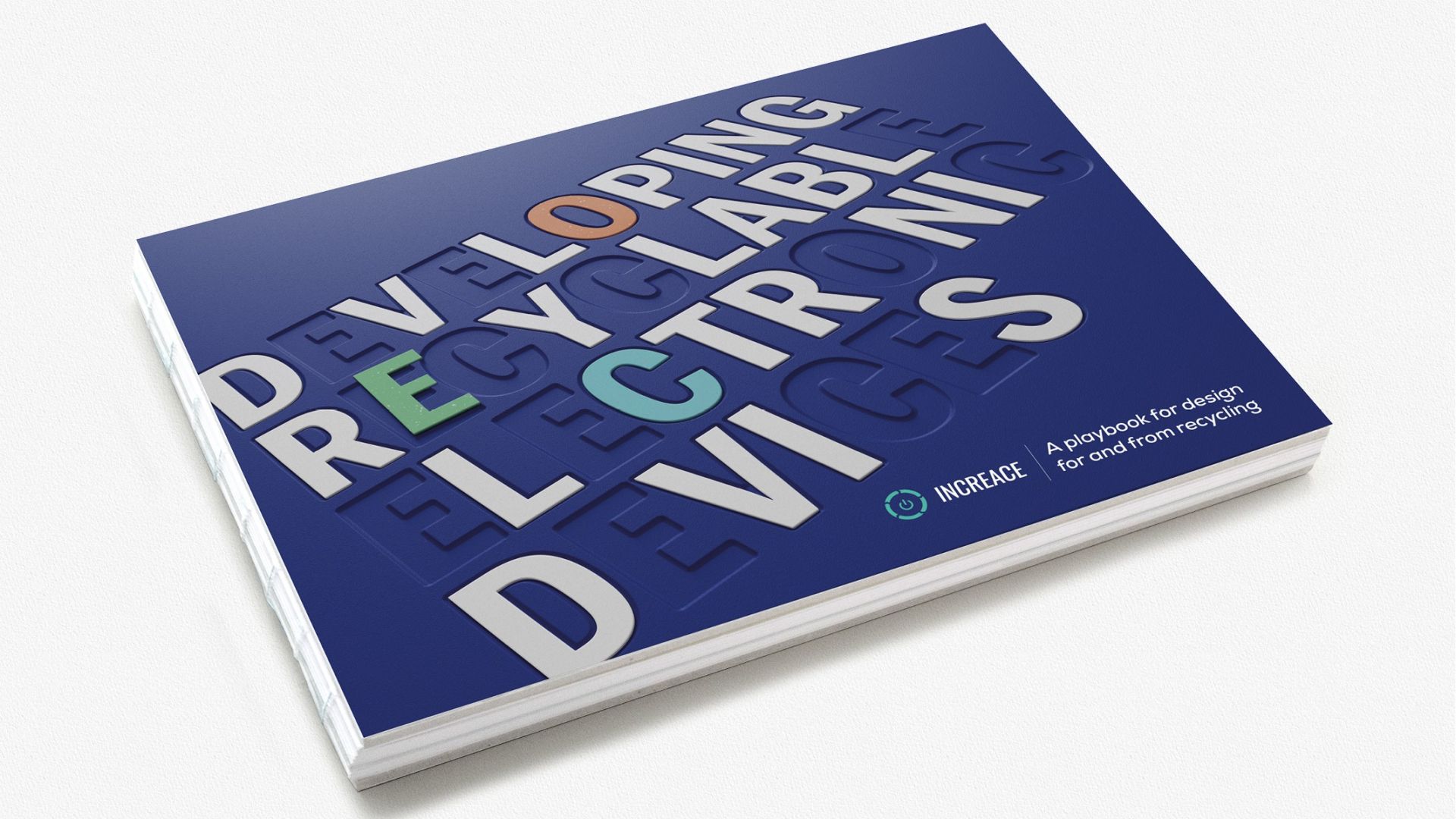
Fordern Sie jetzt kostenlos das Buch an: „Developing Recyclable Electronic Devices“
Dieses Handbuch bietet konkrete Anleitungen für Produktentwickler und Ingenieure in der Unterhaltungselektronik, die mit recycelten Kunststoffen arbeiten und Produkte entwickeln möchten, die tatsächlich für ein hochwertiges Recycling geeignet sind.
2. Bio-based and biodegradable engineering plastics
The market for bioplastics is set to grow exponentially by 2030, with a compound annual growth rate (CAGR) of around 15–19 per cent. Bio-based engineering plastics derived from non-food biomass (sugar cane, cellulose, lignin) now offer properties that can compete with those of conventional polyamides, polycarbonates and even PEEK. Materials such as bio-PA, bio-PE and bio-PEEK have a significantly lower carbon footprint (30–70 per cent fewer greenhouse gases), without engineers having to compromise on mechanical properties, heat resistance or chemical stability.
This presents new challenges for plastics engineers. The processing parameters often differ from those of fossil-based variants, and long-term properties such as hydrolysis and UV resistance must be carefully assessed. At the same time, this opens up new application opportunities in the fields of medical technology, sustainable consumer electronics and packaging, where both functionality and environmental sustainability are crucial.
This trend goes hand in hand with the circular economy: many bio-based plastics are designed to be compostable or chemically recyclable, thereby enabling closed-loop systems.
3. Weight reduction and replacement of metal
Lightweight construction remains a dominant trend, particularly in the automotive industry (EV battery housings, structural components), aerospace, robotics and mechanical engineering. Engineering plastics such as polyamides, polycarbonates, PEEK and PEI are replacing metal thanks to their excellent strength-to-weight ratio, corrosion resistance and design flexibility. In the automotive sector, this substitution not only results in reduced weight and improved fuel efficiency, but also in lower production costs and faster assembly.
However, by 2026, engineers will need to think beyond mere replacement. Hybrid designs (overmoulding plastic onto metal or vice versa) and advanced simulations will be essential for optimising tolerances, thermal behaviour and fatigue strength. Flame-retardant and thermally conductive compounds are becoming increasingly important, particularly in electronics and battery applications.
This trend reinforces the role of plastics engineering as a strategic discipline: it is no longer simply a matter of ‘plastics instead of metal’, but rather of making an informed choice of materials that balances performance, cost and sustainability.
4. Additive manufacturing using engineering plastics
Additive manufacturing (3D printing) using engineering plastics is evolving from rapid prototyping towards the full-scale production of functional parts and small batches. Processes such as SLS, SLA and FDM, using materials such as PEEK, ULTEM, PA12 and recyclable filaments, enable complex geometries that cannot be achieved with conventional injection moulding. Multi-material printing and the integration of circular economy printing materials will become mainstream by 2026.
For engineers, this represents a fundamental change in the development process. Iterations are faster, supply chains are shorter and waste is minimised. At the same time, this calls for new design principles: topology optimisation, lattice structures and integrated functionality (such as channels or hinges in a single print).
The transition from prototype to pilot production is seamless. Companies that have mastered this process can validate their products more quickly and bring them to market sooner.
5. AI, digitalisation and smart manufacturing
AI and digital twins are transforming plastics technology from intuitive craftsmanship into data-driven precision. Real-time process optimisation, fault detection, predictive maintenance and automated mould optimisation reduce scrap and drastically shorten lead times. During the development phase, AI-driven simulations ensure that engineers require significantly fewer physical prototypes.
This has a direct impact on the entire supply chain: from material selection and design validation right through to production and quality control. Smart plastics with integrated sensors (conductive or self-healing compounds) also open up new functional possibilities for smart products.
For engineers, digital skills are becoming just as important as knowledge of materials. Those who master these tools can create more complex designs with greater reliability and at lower cost.
6. High-performance and smart (functional) plastics
Demand for high-performance and functional plastics is rising rapidly. Conductive, antibacterial, self-healing, EMI-shielding and extremely heat-resistant materials (nanocomposites, smart polymers) are increasingly being used in electronics, medical technology and industrial plant. Halogen-free flame-retardant solutions and materials that perform under extreme conditions are becoming the norm.
By 2026, engineers will need to take into account not only mechanical and thermal properties, but also functionality at the molecular level. The integration of electronics directly into plastic (MID technology) and smart coatings are being used more and more frequently.
This trend boosts the competitiveness of companies that are able to think in an interdisciplinary way: plastics engineering combined with electronics and mechatronics.
How can you prepare for these trends?
These six trends show that plastics engineering will be more complex and exciting than ever by 2026. Successful product developers are already integrating the circular economy, digitalisation and performance requirements into the concept phase. Doing so reduces risks, shortens time to market and meets increasingly stringent customer and regulatory requirements.
Would you like to make your next product development future-proof? At PEZY, we combine in-depth plastics engineering with the principles of the circular economy, rapid prototyping and a ‘one-stop-shop’ approach. From concept to recyclable mass-produced product.
Do you have any specific questions about any of these trends, or would you like a Break-Through session to explore how they might apply to your project? Please feel free to get in touch! We’d be happy to brainstorm with you.
Frequently Asked Questions on Trends in Plastics Technology
The circular economy and ‘design for recyclability’ are currently the trends having the greatest impact. Under the EU PPWR Regulation, engineers must take recyclability and the use of recycled materials into account as early as the concept phase.
Modern bio-based engineering plastics (such as Bio-PA and Bio-PEEK) are increasingly matching the mechanical properties, heat resistance and processability of their fossil-based counterparts, whilst their carbon footprint is significantly lower.
AI is used for material simulations, the optimisation of designs, the prediction of shrinkage and deformation, and even for the automatic generation of mould designs. This makes it possible to significantly reduce the number of physical prototypes.
It is strongly recommended that the concept of circularity be taken into account in every new development project. Anyone who waits until 2027–2028 runs the risk of higher costs, compliance issues and falling behind the competition.
Investment during the engineering phase is usually 10–20 per cent higher, but often leads to savings of 15–30 per cent in material costs, scrap and future adjustments. An early ‘Breakthrough Session’ helps to illustrate this.
Ready to talk?
We work with companies that want to successfully develop products or components. Together, we achieve the best results, from initial concept through to production.

 PEZY ist offiziell als Great Place To Work™ zertifiziert. Eine Auszeichnung, die vollständig auf dem Feedback unserer Mitarbeitenden basiert.