Why the next innovation is probably already in your current product
Innovation is often associated with new products. Yet the greatest gains are often closer than you think: in the products you already develop, manufacture or sell today. By re-examining existing design choices you can improve quality, reduce costs and make products more sustainable, without starting from scratch.
In brief
- 70 to 80% of the product costs are already determined during the design phase. That is where the greatest opportunities for optimization lie.
- Sustainability also starts with engineering. Up to 80% of the environmental impact is determined by design choices such as material use, product architecture and creatability.
- Small design adjustments can have a big impact. Less parts, smarter geometries and better material choices reduce costs and increase performance.
- Innovation does not always mean a new product. Redesigning existing products with today's knowledge and techniques often brings the biggest profit.
When companies talk about innovation, the conversation quickly turns to new product concepts, new technologies or entirely new markets. That’s understandable. New products attract attention and symbolise progress. Yet much innovation does not occur at the start of a product’s lifecycle, but rather halfway through.
Products that have been successful on the market for years were often developed using the knowledge, materials and manufacturing techniques available at the time. Since then, materials have improved, production processes have become more efficient and requirements around sustainability, circularity and cost-efficiency have changed. So the question is not only which new product you should develop. A more interesting question is: if you were to redesign this product today, would you make the same choices?
Most costs are fixed before production even begins
Many organisations only start optimising when production becomes more expensive, quality problems arise or margins come under pressure. That is remarkable, because research has shown for years that the greatest influence on final product cost is exerted much earlier.
It is estimated that 70 to 80% of total product costs are determined during the design phase. Once a design has been released and tooling developed, the scope for fundamental improvements rapidly decreases. Engineering is therefore not only a technical discipline, but also an important tool to influence cost price, quality and manufacturability.
Sustainability is also determined during design
The same applies to sustainability. According to McKinsey research, up to 80% of a product’s environmental impact is determined during the design phase. Material selection, product architecture, ease of disassembly, weight and production method largely determine how sustainable a product ultimately is.
That means sustainability targets are not only achieved by using recycled materials or greening production processes. They begin with fundamental design choices. Increasingly, organisations are re-examining existing products with questions such as: can we use less material, combine parts, make assembly simpler or make the product better suited for repair and disassembly?
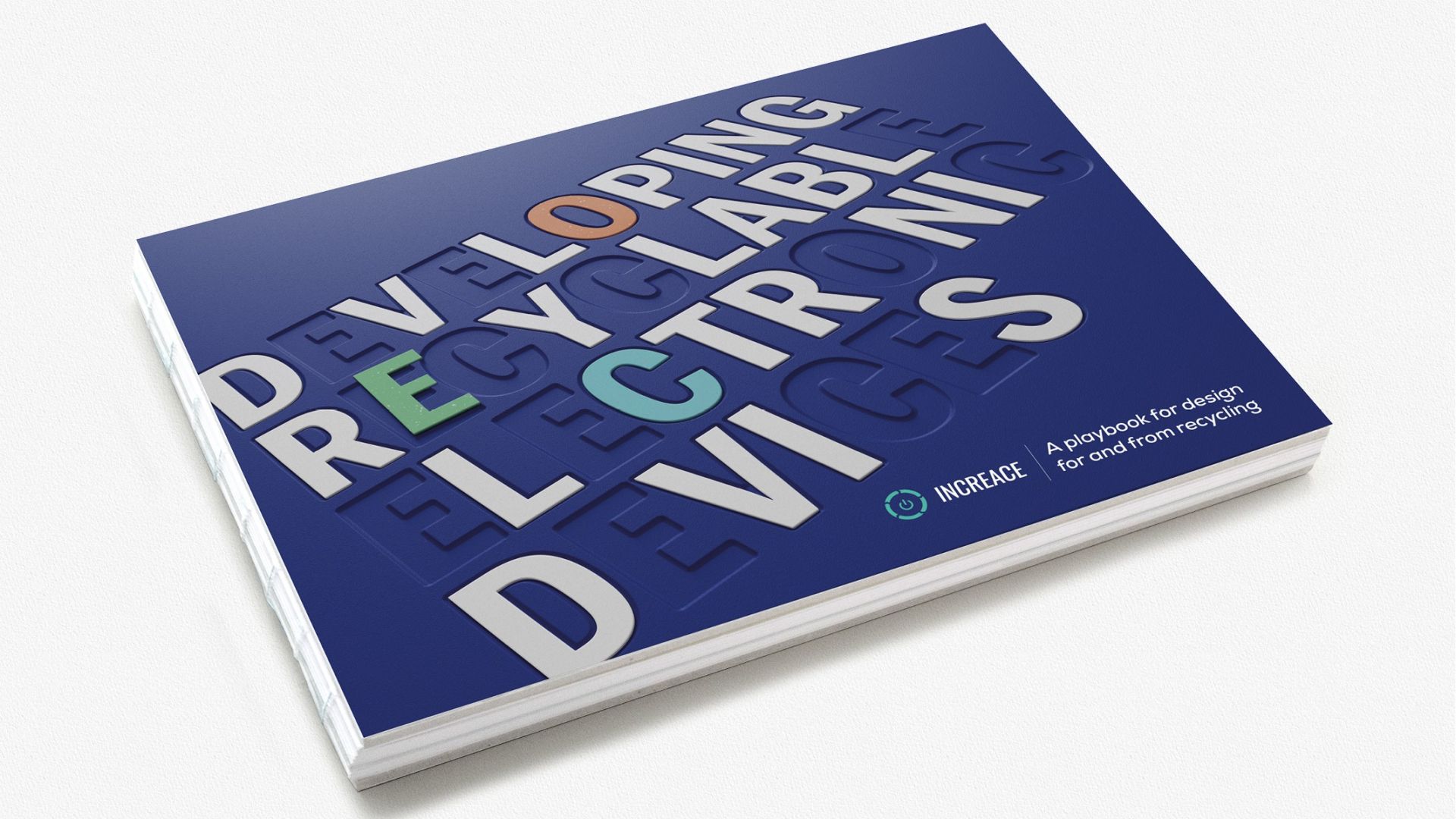
Request the book now for free: Developing Recyclable Electronic Devices
This handbook offers concrete guidance for product developers and engineers in consumer electronics who want to design with recycled plastics and develop products that are genuinely suitable for high-quality recycling.
Small design choices often have a surprisingly large impact
Product optimisation does not have to mean redeveloping an entire product. In fact, relatively small adjustments can have major effects on performance, cost and sustainability.
A different rib structure, for example, can increase stiffness without adding material. An adjusted wall thickness can shorten cycle time during injection moulding. Combining multiple components can save assembly time and improve reliability. Individually these may seem like modest changes, but together they can result in a product that is cheaper to manufacture, easier to assemble and better aligned with current market demands.
Product development doesn’t stop after market introduction
Many organisations consider a product ‘finished’ once series production is running. In reality, that is when a new phase begins. New insights from production, changing customer requirements, technological developments and stricter regulations continuously prompt a re-evaluation of an existing design.
Organisations that invest in this see product development not as a one-off project, but as a continuous improvement process. Not because the product isn’t good enough, but because a good product can be even better in five years’ time.
Five questions every R&D Manager should ask themselves
Before developing an entirely new product, it’s worth taking time to consider your existing product portfolio.
- Which design choices were made years ago and deserve fresh attention?
- Which parts cause the highest production or assembly costs?
- Which materials would you choose differently today?
- Which sustainability objectives can you achieve through engineering?
- Where is the greatest gain without redeveloping the entire product?
Perhaps the next innovation is not in a new product, but in the product that already sits on your production line today.
From insight to improvement
At PEZY we look at products daily through the lens of polymer engineering, product development and manufacturability. Because of that combination, we often spot where existing products can be made smarter, lighter, stronger, more sustainable or more cost-effective.
Do you have an existing product you suspect could be improved? A fresh engineering perspective can help reveal hidden improvement opportunities.
From insight to results