
Bespoke plastic enclosures – Design and manufacture
Plastic enclosures are essential for the protection and functionality of products in the electronics, mechanical engineering, industrial equipment and consumer goods sectors. PEZY develops and manufactures bespoke enclosures using injection moulding, with a strong focus on manufacturability, choice of materials and technical requirements such as impact resistance, ease of assembly and environmental resistance.
Thanks to our in-house Pilot Factory, we carry out prototyping, testing and modifications quickly and in-house. This significantly shortens the development process and reduces risks and costs when moving to series production.
Applications of our plastic enclosures
Plastic enclosures are used across a wide range of sectors, with requirements varying greatly depending on the application: from protecting electronics against dust and vibrations to robust enclosures in harsh industrial environments, and from aesthetic designs for consumer products to functional solutions for sensors and hygiene equipment. Below is an overview of the main areas of application, including typical requirements and points to consider.
Electronics and control systems
In electronics and control systems, plastic enclosures protect sensitive components such as printed circuit boards, connectors and modules from dust, mechanical stress and environmental influences. We focus on integrated mounting features (lugs, screw holes or snap-fit systems), cable entry points with seals and ventilation openings for heat dissipation. Materials such as ABS or PC provide good insulation, impact resistance and EMC compatibility where required. This makes the enclosure suitable for controllers, power supplies, embedded systems and IoT devices.
Mechanical engineering and industrial equipment
For mechanical engineering and industrial equipment, we develop robust enclosures that can withstand vibrations, impacts and harsh environmental conditions such as moisture, chemicals or temperature fluctuations. The emphasis is on high mechanical strength achieved through ribbed structures, thicker walls and materials such as PA or reinforced PP. Enclosures are designed with a view to easy assembly, access for maintenance and integration into existing machines or installations, such as control cabinets, instrument panels or drive systems.
Consumer products
For consumer products, we combine functionality with aesthetics in housings for devices and accessories. Surface quality, textures, colour consistency and a sleek finish play a major role here, often using ABS or PC to achieve a premium look. We focus on ease of use (ergonomic shapes, button integration, battery compartments) and compatibility with assembly processes. Typical examples include portable devices, domestic electronics, accessories and small household tools where design and reliability go hand in hand.
Other sectors
In other sectors, such as sensor and measurement technology, hygiene solutions and detection applications, we tailor enclosures to specific requirements. For sensor enclosures, we ensure precise positioning, minimal interference and protection against environmental influences (e.g. IP standards). In hygiene and measuring instruments, we prioritise smooth surfaces, chemical resistance and ease of cleaning. This includes applications in IoT sensors, laboratory equipment, security systems and medical peripherals where functionality and compliance are paramount.
Choose the right plastic for your housing
We select materials based on the specific requirements of the application, such as mechanical stress, environmental factors, aesthetics and production efficiency. The most commonly used thermoplastics for bespoke enclosures are:
ABS (acrylonitrile-butadiene-styrene)
ABS offers a good balance between impact resistance, rigidity and surface quality. It is lightweight, highly resistant to chemicals and has a smooth finish that is suitable for painting or texturing. This makes ABS a popular choice for housings in electronics, consumer appliances and general industrial applications where a combination of strength and aesthetics is important.
PC (Polycarbonate)
Polycarbonate is characterised by high impact resistance (even at low temperatures) and excellent transparency. It is suitable for enclosures that need to absorb mechanical shocks or where a clear finish is required (e.g. windows or displays). PC performs well in outdoor applications and offers better UV resistance than ABS, provided additives are used.
PP (Polypropylene)
PP is characterised by its low density, high chemical resistance and good fatigue resistance. It is ideal for enclosures that come into contact with corrosive substances, moisture or cleaning agents. PP is also suitable for single-material designs, which facilitates recycling, and is frequently used in hygiene and industrial applications.
PA (Polyamide / Nylon)
Polyamide offers high wear resistance, strength at elevated temperatures and good mechanical properties under load. It is suitable for housings in demanding environments involving vibration, friction or higher temperatures. PA can be reinforced with glass fibre for additional rigidity.
Optional modifications
In addition to material selection, we implement structural and functional optimisations: ribbed structures for increased rigidity without additional material, seals (O-rings, gaskets or overmoulding) to ensure water or dust tightness, EMC protection (conductive coatings or inserts), surface treatments (texture, paint or coating) for grip, appearance or protection, and single-material designs to simplify disassembly and recycling.
How do we develop a plastic housing?
We follow a structured process to take an idea from concept to a viable and validated product, with the Pilot Factory at the heart of the process to ensure speed and control.
Design and DFM (Design for Manufacturing)
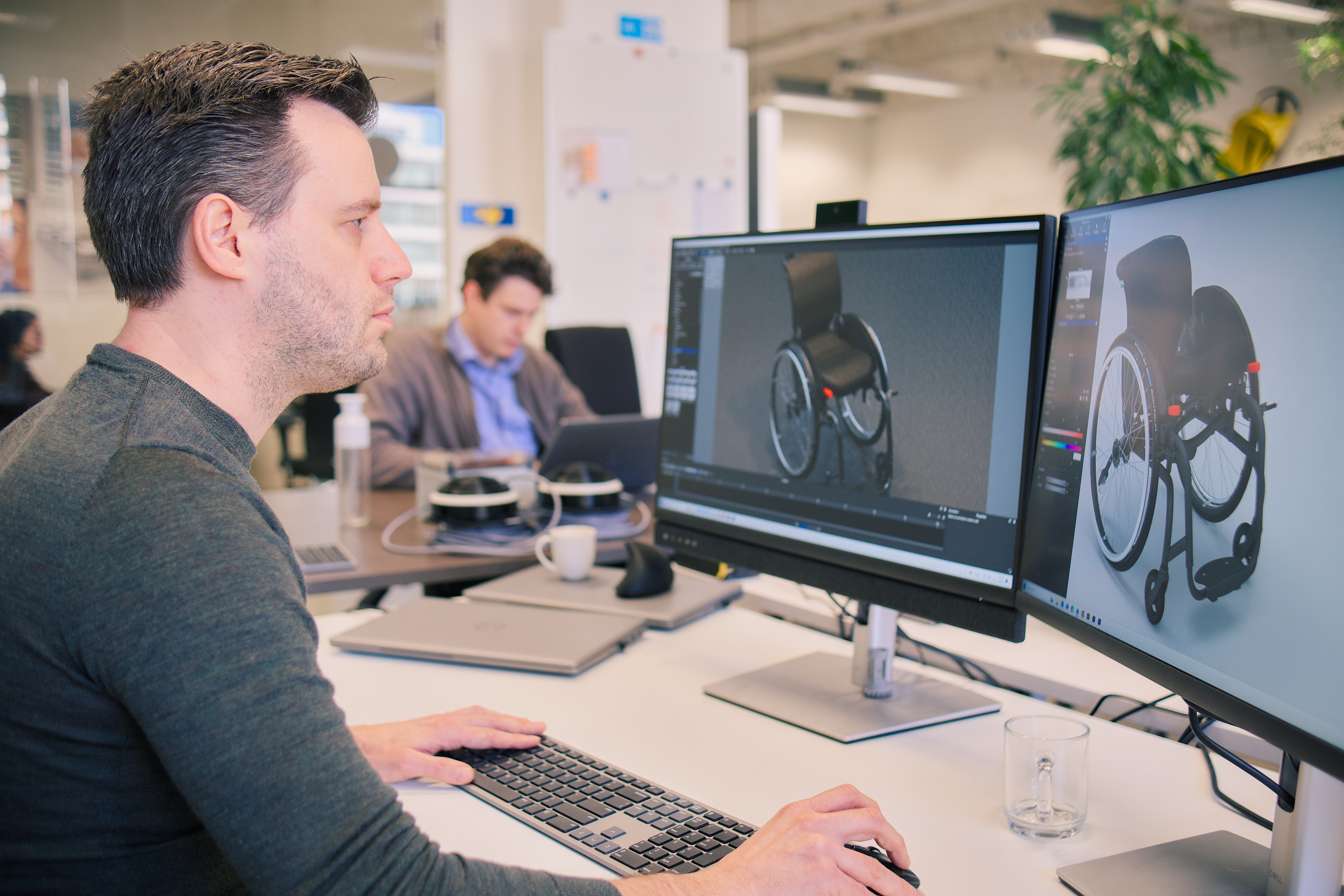
During the design phase, we model the housing in 3D, focusing on manufacturability. We optimise wall thicknesses, venting, warpage, tolerances and ejectability to prevent problems during the injection moulding phase. This involves simulations (e.g. flow analysis) and early feedback on costs and risks.
Prototyping
We build rapid prototypes in the Pilot Factory: using 3D printing for shape and fit, or low-volume injection moulding for realistic material properties and surface quality. This enables us to carry out multiple iterations without incurring high costs.
Validation
Prototypes are tested for mechanical strength (drop, compression and vibration tests), assembly (printed circuit board or component integration), functionality (closure, sealing, ventilation) and any specific requirements (IP standards, EMC, temperature range). Any modifications are carried out immediately in-house.
Production
For small production runs, we manufacture in-house using injection moulding machines. We prepare the tooling and process parameters for upscaling at external partners, including documentation for handover (DFM report, test reports).
This process results in a housing that not only meets the technical requirements, but can also be produced efficiently, reproducibly and cost-effectively.

PEZY: the industrial product development company that brings together the conception and manufacture of plastic enclosures
We develop and manufacture bespoke plastic enclosures for organisations wishing to turn their ideas into manufacturable, functional products. From our sites in Eindhoven, Groningen and Utrecht, multidisciplinary teams work on solutions that are right in terms of form, function and manufacturability – with a particular focus on complex plastics.
Whether it concerns enclosures for electronics, industrial equipment or consumer products, we oversee the entire process from concept development and prototyping in our Pilot Factory through to validation and final product design. Thanks to this integrated approach, we shorten the development cycle and increase certainty at every stage.

 PEZY is officially certified as a Great Place To Work™. This recognition is based entirely on feedback from our employees.