Electronics engineering agency: from concept to mass production
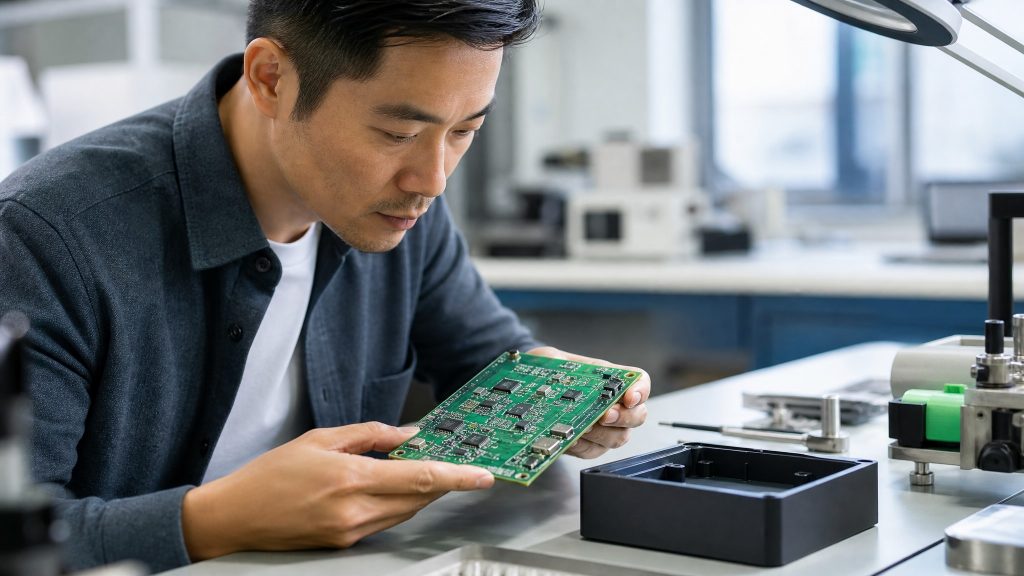
A brilliant electronic idea must be technically translated into a reliable, manufacturable product. PEZY offers an integrated trajectory of electronics engineering, product design and small-scale production (Pilot Factory) to validate concepts early, prevent integration issues and make the step to mass production manageable.
In brief
- Engage an external electronics engineering agency once internal R&D stalls due to a lack of specialist capacity or when projects stagnate between concept validation and a manufacturable design.
- Integrate electronics, mechanics and enclosure from day one: concurrent development reduces thermal and fitment issues and aligns with Design for Manufacturing principles.
- Secure IP, certification and production transfer with transparent processes, documented traceability and clear contractual agreements; an external partner must collaborate seamlessly with your internal teams and provide a single point of contact.
A brilliant idea for a new electronic product is only the beginning. The real challenge is converting it into a reliable, manufacturable physical device. Many companies have strong conceptual thinkers, but lack the technical depth to make hardware innovation manufacturable without costly iteration cycles. A specialised electronics engineering agency is the missing link between abstract functionality and concrete mass production. PEZY supports organisations in that transition by combining engineering, product design and manufacturing capacity into one coherent trajectory.
When should you engage an external electronics engineering agency?
Internal R&D teams run into problems when the pace of innovation needs to exceed the available specialist capacity. Search terms like ‘electronics engineering company’ and ‘hardware development’ generate hundreds of impressions per month, which shows companies actively look for external development capacity once internal resources fall short for specific hardware challenges. That shortfall rarely stems from a lack of ambition. More often the core competence lies elsewhere, and hiring permanent specialists for a temporary peak is not financially or organisationally viable.
You will notice external expertise is needed once projects stall between concept validation and a manufacturable design. Bringing in a partner is not a sign of weakness, but a strategic choice to fill knowledge gaps without heavily burdening your own organisation. Product managers and entrepreneurs often recognise this moment by recurring technical bottlenecks that unacceptably extend time-to-market.
Don’t wait until the project is completely stuck before considering external capacity. Have the technical feasibility validated early in the process by a specialised party, so fundamental errors do not propagate into later development stages. External hiring works best as a complement to in-house strengths, not as a bandage for structural problems.
This model is not suitable for companies that want to outsource their core intellectual property entirely without internal oversight.
Integration of electronics, mechanics and enclosure
Electronics engineering never stands alone in modern product development. Physical integration and thermal management directly determine how reliable the final hardware will be. Combining engineering, product design and manufacturing in a single trajectory prevents the common pitfall where electronics and mechanics only come together late in the process, often leading to costly compromises or complete redesigns. When these disciplines work together from day one within a single team, solutions emerge that are both technically robust and practically manufacturable.
Your product benefits from this integrated approach because enclosure constraints are considered immediately in the electronics design. Thermal management is a factor that is easily underestimated in the early concept phase but can seriously impact performance later in development. Developing mechanics and electronics concurrently secures functionality before costly moulds or PCBs are ordered.
PEZY combines these disciplines under one roof to structurally eliminate later integration issues. This approach aligns with Design for Manufacturing principles, which ensure every design element takes assembly and testing realities into account. Isolate your electronics design from the rest and the end product is almost always suboptimal.
From prototype and pilot run to small-scale production
The gap between a functional laboratory prototype and a stable production product is an underestimated barrier for many innovative companies. PEZY operates its own Pilot Factory for prototypes, pilot runs and small-scale production, ensuring the transition from concept to manufacturable product is secured internally and does not depend on external suppliers with different priorities. That physical infrastructure makes it possible to quickly validate designs under real conditions before volume production is considered.
Pilot runs in a controlled environment yield data that simulations alone cannot provide. At this stage you see exactly where tolerances pinch, where assembly is difficult and where components behave unexpectedly. These insights are necessary to make the design robust for larger quantities: what works on paper sometimes fails in practice due to subtle differences in materials or assembly.
Small-scale production is the final stress test for your hardware design. Through small-scale electronics production you bridge the gap between development and market introduction without immediately taking on the large financial risks of mass production. Pure design firms without their own facilities cannot perform this validation step independently.
Collaboration with internal R&D teams and specialised partners
Transparency about in-house capabilities versus partner expertise is essential for trust. PEZY claims PCB design or in-house electronics development only when this can be factually substantiated, and we are clear about what we do ourselves and where we engage specialised partners, so you are never surprised about the origin of a technical solution. That honesty prevents false expectations and ensures a collaboration based on reality, not marketing promises.
An external agency must integrate seamlessly with your existing teams without friction or loss of knowledge. We act as an extension of your internal R&D department and align our methodology and tools with your processes and communication lines. That requires a partner who understands that knowledge transfer is just as important as the technical output itself.
For very specific niche technologies we work with selected specialists. Within the complete product development trajectory we remain ultimately responsible for the integration and quality of all deliverables. You have a single point of contact, regardless of how many disciplines are working behind the scenes.
Intellectual property, certification and production transfer
Outsourcing hardware development rightly raises questions about safeguarding intellectual property and regulatory compliance. NDAs and clear contractual agreements on IP rights form the legal basis, but real certainty only arises from a structured development process in which documentation and traceability are standard. Certification processes such as CE marking therefore belong in the design phase, not as an afterthought.
A careful production transfer limits risks when scaling to mass production or outsourcing to Asia. Without complete and validated documentation packages you lose control over quality and consistency once production moves outside your direct sphere of influence. We record all specifications, test reports and assembly instructions unambiguously and reproducibly before transfer takes place.
Your innovation remains protected through transparent processes and clear ownership structures. That gives peace of mind during the development process and prevents legal complications in future funding rounds or exits. Retaining control does not mean doing everything yourself, but maintaining a grip on every step.
Relevant cases in electronics and hardware development
Theoretical capabilities say less than proven results in practice. In various projects PEZY has realised electronics integration for clients struggling with the complexity of multidisciplinary hardware development. These cases demonstrate the breadth of our services, from the initial concept study to full production transfer to external manufacturers.
Each project brings its own technical challenges that require bespoke solutions. Whether it concerns miniaturisation, energy efficiency or robustness in extreme conditions, the result ultimately matters more than the method used. Our experience across sectors enables us to apply proven solutions cross-industry, where others repeatedly start from scratch.
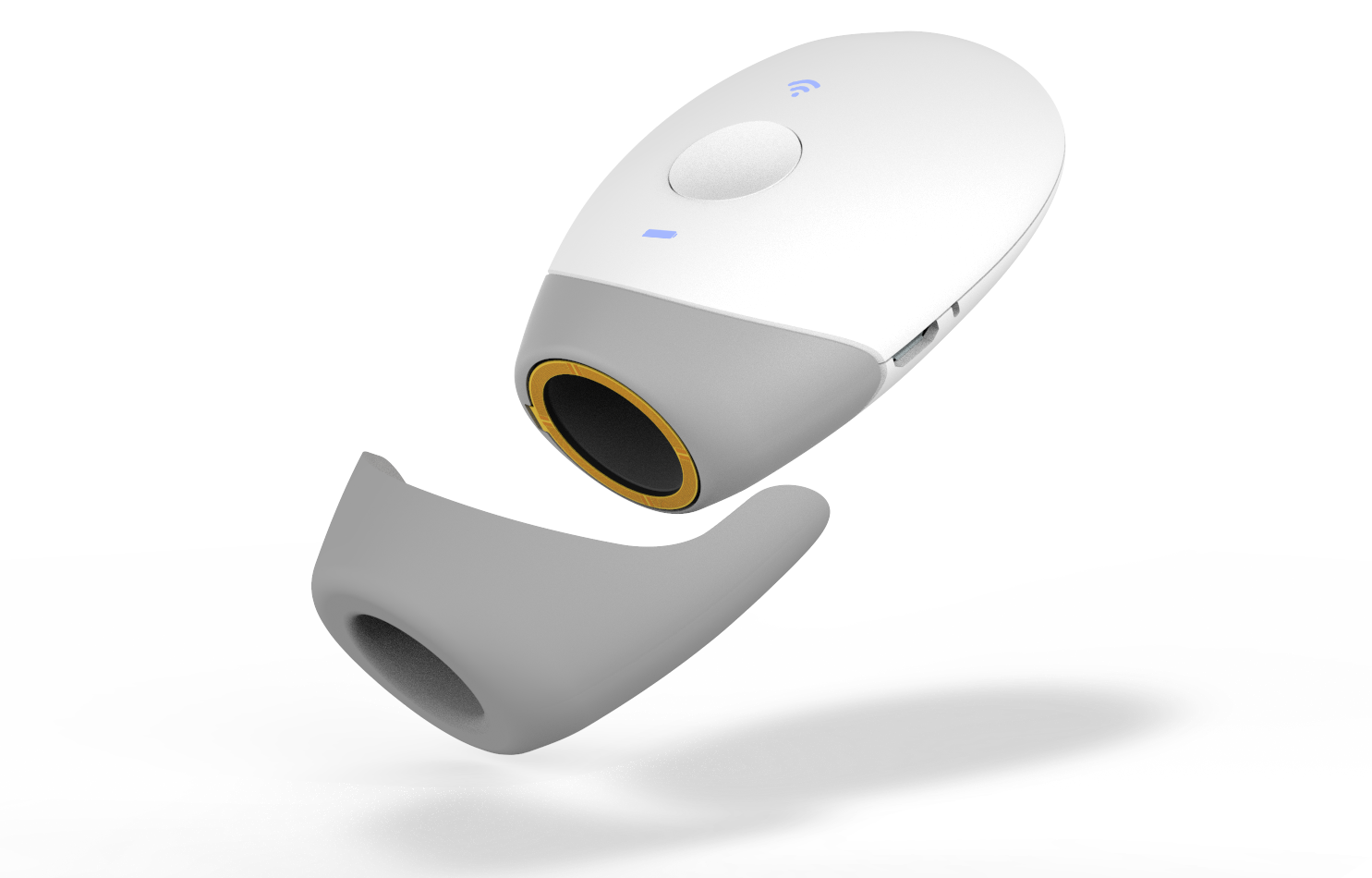
Concrete proof of manufacturable innovation is found in our project portfolio. These examples show how we translate abstract wishes into working products that meet strict industrial requirements.
Discuss your electronics project with PEZY
Great ideas deserve ingenious product developers who understand what it takes to make them real. If you recognise that your current capacity is insufficient for the next step in your hardware innovation, a conversation is the logical next step. Waiting for the perfect moment often costs more time and money than exploring possibilities now.
A Break Through Session is a non‑binding starting point to test your challenge against our expertise. In this meeting we jointly investigate feasibility, identify potential risks and outline a realistic path to realisation. Contact us to discover how we can advance your electronics project.
Frequently asked questions about electronics engineering
What does hiring an external electronics engineering agency cost?
Costs vary greatly depending on project complexity and required specialisms. An initial exploratory conversation is usually free and provides insight into the expected investment for your specific situation. Fixed-price agreements are possible for clearly defined phases, while open innovation projects often run on a time-and-materials basis.
How long does a typical hardware development trajectory take?
Lead times depend on the maturity of the concept and component availability. A proof-of-concept can be ready within weeks, while full product development including certification can take months to years. Realistic planning only emerges after a thorough feasibility analysis in the start phase.
Can my own engineers collaborate with an external agency?
Collaboration with internal teams is a core component of effective external engagement. The external agency acts as an extension of your own R&D department and aligns processes and communication with your working methods. Knowledge transfer happens continuously during the project so your organisation becomes stronger from the collaboration.
Who owns the intellectual property after external development?
Standard agreements ensure that intellectual property remains with the client unless otherwise agreed. Contractual documentation via NDAs and development agreements prevents ambiguity about rights and licences. Transparency on this topic belongs in the very first discussion phase, not only at delivery.
From insight to results
Product development in practice



Let's get to know each other
This site is protected by reCAPTCHA and the Google Privacy Policy and Terms of Service apply.