Electronics, mechanics and product design in harmony
Developing electronics enclosures: from concept to production
An electronic product is more than a circuit board. The enclosure protects components, supports operation and maintenance, and helps determine how the product is manufactured. PEZY develops electronics enclosures for sectors including industry, medical applications and consumer products, with a focus on construction, standards, appearance and series production.
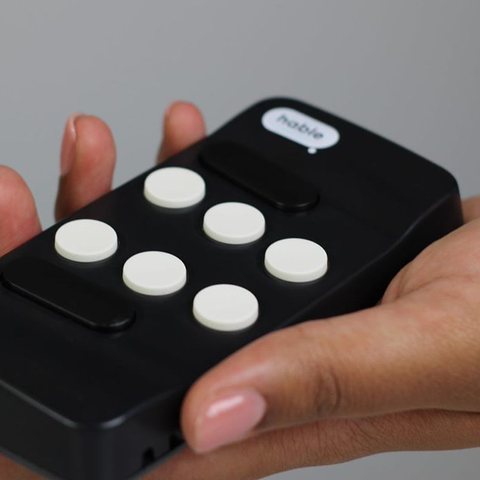
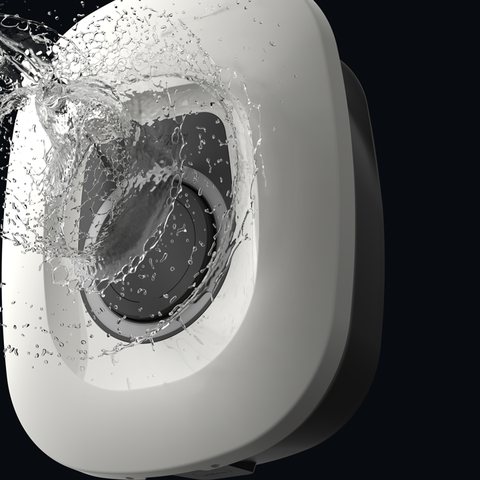

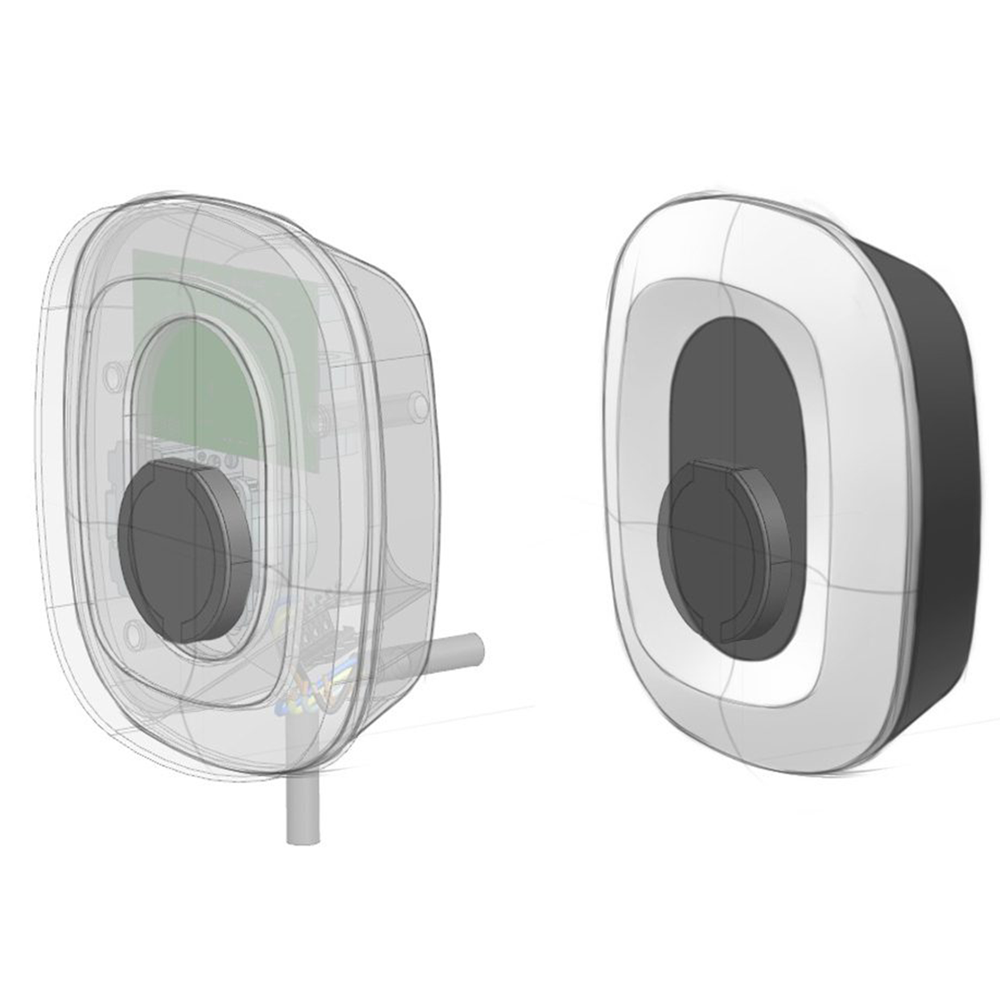
These companies trust PEZY to turn their product ideas into reality.






The basis for a suitable electronics enclosure
The application, user and environment determine the requirements. We combine your product idea and domain knowledge with our product development expertise. Functional and technical specifications make the key trade-offs explicit, ensuring that the design is driven by real-world needs rather than assumptions.
Use and ergonomics
We map out operation, comfort and usage scenarios. Shape, grip, accessibility and the position of interfaces must suit the user.
Environment and loads
Moisture, dust, temperature and mechanical loads affect the material, sealing and construction. We translate these conditions into testable requirements.
Maintenance and service
We determine which components must remain accessible and how maintenance, repair and replacement can be carried out without unnecessary disassembly.
Volume and cost
Expected volumes, tooling investment and target cost guide the choice of production method. We assess the overall approach, including assembly and quality control.
Electronics and mechanics
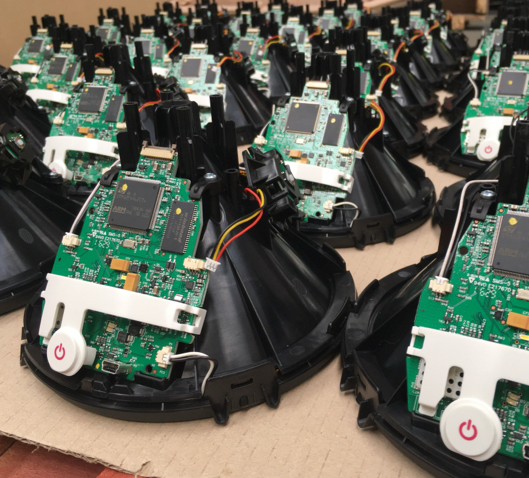
The circuit board, mounting, connectors, wiring and enclosure are coordinated with one another. We define interfaces between disciplines at an early stage.
Standards, safety and CE from the outset
Requirements vary across industry, healthcare, technology, consumer products, FMCG and professional applications. We determine which regulations and standards are relevant to the complete product and what contribution the enclosure must make. An enclosure on its own does not demonstrate that an end product is compliant.
-
Safety
We examine how the construction must protect users, electronics and the environment. This includes electrical safety, accessible parts, material selection and conditions of use.
-
Reliability
Loads, service life and environmental factors are translated into requirements and a validation plan. This makes reliability a testable objective.
-
CE marking
When CE marking applies, we prepare the relevant requirements, assessments and documentation. It is not a general quality mark or a standalone guarantee of suitability.
-
EMC
Shielding, openings, cables, grounding and the electronics affect electromagnetic compatibility. We assess them together and prepare the relevant tests.
-
Testing and certification
We identify at an early stage which assessments and any external inspections are required. This reveals dependencies and potential adjustments sooner.
-
Market launch
A complete, well-substantiated file helps prepare for market launch. The relevant market and product category determine the final route.
From specifications to a manufacturable enclosure
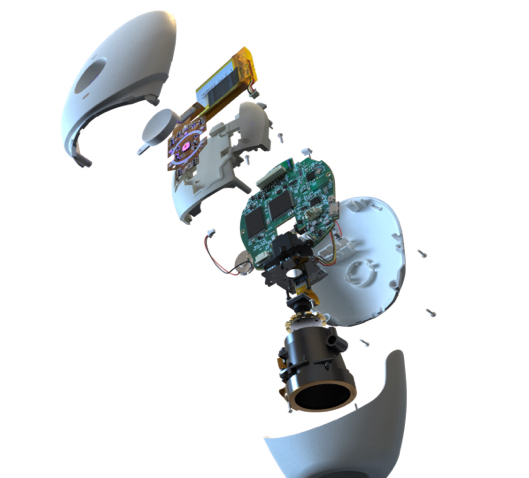
We translate the requirements into a design that brings together protection, usability and appearance. Water and dust protection, mechanical robustness, vibration resistance, thermal management and EMC are assessed as a whole. This stage also covers the integration of PCBAs, displays, connectors and wiring, service-friendly assembly and brand identity. Developing the electronics and enclosure in parallel reveals conflicts sooner. Plastic injection moulding can be attractive at higher volumes, but a threshold such as 1.000 units is not a fixed rule: product complexity, mould costs, material and service life determine the trade-off.
Material selection and circular solutions
Mechanical strength, temperature, chemicals, UV and fire behaviour influence material selection. We assess properties against the specific application and take service life, costs and the production approach into account. Recycled or bio-based does not automatically mean a lower environmental impact; that assessment requires insight into the application and life cycle.
Engineering plastics
We select a suitable material grade based on functional requirements, processing and finishing. Additives and grade can make a significant difference.
Aluminium and other metals
Metals can meet requirements for rigidity, heat dissipation or shielding. Machining, weight, insulation and assembly are assessed in context.
Composites
When a combination of properties is required, we explore composite materials. We also consider joining methods, processing and end-of-life options.
Circular plastics
Recycled or bio-based plastics are assessed for performance, availability and processability. Disassembly and material selection can facilitate repair and recycling.
Enclosure prototyping and validation
We use functional models, 3D prints and, where necessary, pilot injection-moulded parts to test design choices. Small series can be produced in Groningen for functional and aesthetic validation. The selected test setup reflects the material and how representative the prototype is.
Mechanical functionality
We examine construction, loads, impact and moving or closing parts in relevant usage scenarios.
Thermal behaviour
We measure or analyse heat generation and dissipation to monitor critical temperatures and material limits.
Assembly
We assess the assembly sequence, accessibility, fastenings and the options for a repeatable assembly process.
User experience
We test whether the product works intuitively, comfortably and convincingly for the intended user.
Water and dust protection
We test the degree of protection of the complete construction, including connections, seams and seals.
Light pattern and light guides
Light distribution, uniformity and appearance are assessed against the functional and aesthetic requirements.
Tolerances and fit
We check dimensions, seams and interfaces and examine whether parts work together within the selected production tolerances.
Manufacturability and repeatability
We assess not only a single working prototype, but also the conditions for reproducible parts and assembly.
Tooling and preparation for series production
After validation, we further develop the drawings, specifications and production approach. The goal is a manufacturable enclosure with clear criteria for quality and release.
-
DFM and optimisation
Using Design for Manufacturing, we align parts, tolerances and assembly with injection moulding or another production process. In doing so, we balance quality, costs and process risks.
-
Production strategy
We determine where tooling and production are best placed: in-house for direct communication and pilot series, or with partners in the Netherlands and Asia for the appropriate capacity and scale.
-
Initial samples and Golden Sample
First-out-of-tool samples are measured and assessed. After any adjustments, an approved reference sample, together with the specifications, defines the intended quality.
-
Technical support
PEZY supports supplier selection, coordination with manufacturers, sample validation and further cost optimisation. This ensures that knowledge gained during development remains available during the transfer.
Production and scaling
Once the samples have been approved, the focus shifts to series production, quality assurance and logistics. We support production start-up and ramp-up, production validation and quality control. The supply chain, logistical preparation and transport to assembly partners or end customers are also coordinated. Depending on the project, we combine our own facilities with international production partners. The choice is based on quality, lead time, volume and costs.
Why PEZY
Why develop electronics enclosures with PEZY?
At PEZY, design, engineering, prototyping and production come together in a single development process. From the outset, we consider manufacturability, standards and scalability. Our own Pilot Factory enables us to test choices using tangible parts and small series. By feeding the findings back into the design, we build an enclosure step by step that suits the product and the intended production process.
3 locations
Design, engineering and production in close collaboration.
Pilot Factory
From the first model to a small series, in-house.
30+ years
Product innovation since 1995.
Great Place to Work
Recognised based on feedback from our employees.
Discuss your electronics enclosure
Which electronics need to be integrated, in what environment will the product operate, and what volumes do you expect? We discuss the key design and production risks and jointly determine a logical next step.
Contact
Schedule a meeting
Choose a time that suits you. We will discuss your question and a logical next step.