Testing a prototype: how to validate function and manufacturability
A prototype only becomes valuable when it answers a clear test question. Discover how to test function, use and manufacturability at each development stage and which type of prototype suits the decision you need to make.
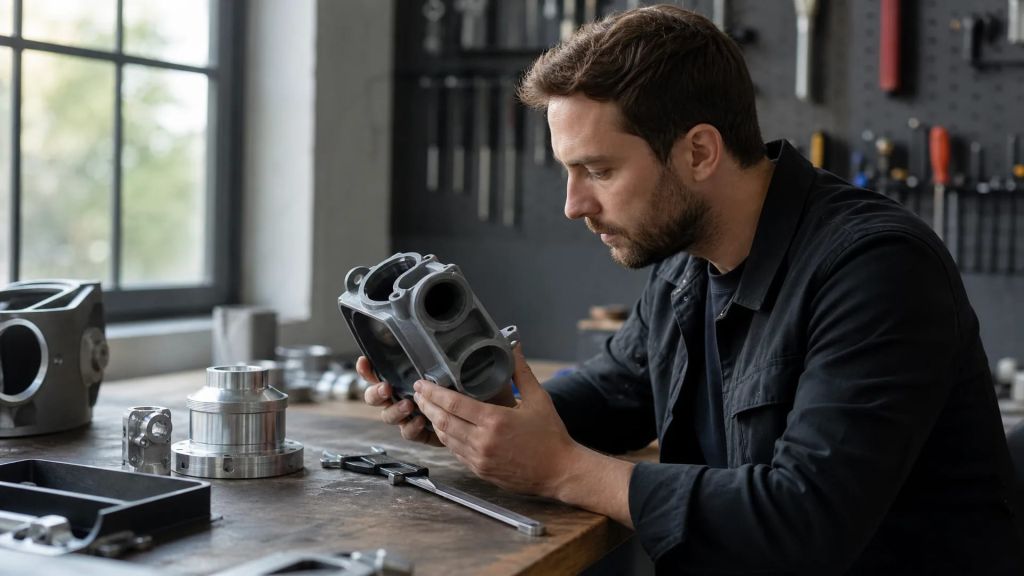
In brief
- Start with one clear test question and choose your prototype based on the decision you need to make.
- Validate function, use and manufacturability in appropriate development phases, from proof of concept to pre-series.
- Use test results to substantiate design choices and the step toward tooling or production.
A prototype is a testing tool. Start with the decision you need to make: does the concept work, is the product comfortable to use, or is the design manufacturable? That test question determines which prototype you build, which properties it must represent and what result counts as proof. That way each test provides information for the next design choice. Also read how PEZY prototyping and rapid tooling are used for testing and small series production.
Which decision do you want to support with a prototype?
Prototyping is not a luxury for perfectionists. It is a necessary investment in the technical and commercial feasibility of your product. Without physical validation, assumptions about functionality, ergonomics and producibility remain speculative, which leads to costly corrections or even failure at later stages. You build confidence by testing early and purposefully, not by holding longer meetings about specifications that no one has yet touched.
Risk reduction in the early development phase
Errors discovered only during mass production typically cost ten to a hundred times more to fix than if they are caught during prototyping. That rise in cost makes early validation financially unavoidable for any company serious about innovation. Expose technical risks in the prototype phase and you prevent having to modify moulds or halt assembly lines after production has already started. The aim is not to remove all uncertainty, but to reduce it in a controlled way at acceptable cost.
Validation of functionality and user experience
A prototype without a clear test question is just an expensive model; every iteration must address a specific technical or functional risk. Users react differently to a physical object than to a render or technical drawing. Hidden usability issues only become visible when someone holds and operates the product, and that feedback loop yields insights no simulation can replace — the foundation for a product that not only works but is intuitive to use. Skip this step and you may launch a product that is technically correct but fails in practice.
Different forms of prototyping and their application
Not every prototype serves the same purpose. Choosing the wrong type leads to delays or unnecessary expenditure in your development process. A visual model tells you nothing about mechanical load-bearing capacity, while a high-fidelity functional prototype is wasted if the underlying architecture is not settled. Therefore determine in each phase which questions must be answered before you invest in materials and machining time.
Proof of Concept versus functional prototype
The difference between a Proof of Concept and a production-ready prototype lies in the scope of validation and the level of representativeness. A PoC only tests whether a core principle is technically feasible, often using makeshift parts and without attention to aesthetics or assemblability. A functional prototype validates full performance under realistic conditions, using materials and tolerances close to final specifications. Never confuse the two: a PoC that looks like the final product creates false expectations, and building a functional prototype to answer a principle question wastes budget.
Visual models and form study
Form studies focus purely on ergonomics, aesthetics and spatial fit, without the internal engineering needing to be fully developed. They are crucial for stakeholder alignment and user tests at a stage when engineering is still evolving, and they enable you to quickly compare multiple variants and steer the design before costly technical decisions are finalised. Make them cheap and fast: their value lies in the learning curve, not in the finish quality.
Pre-series prototypes for production validation
Pre-series prototypes are made with the final production process or a very close approximation thereof, to validate the transition to mass production. Here you no longer test whether the product works, but whether it can be produced reproducibly within the required quality and cost constraints. This phase reveals issues with mould filling, assembly tolerances and material shrinkage that were invisible in earlier iterations. Skip this step and you only discover the limits of your production line once the first thousand units have already been ordered.
PURPOSEFUL PROTOTYPING
Which question must your
prototype answer?
Choose the test question first. Then the prototype and the technique.
Proof of Concept
Does the principle work?
Test the technical feasibility of the core function.
Form study
Does it fit the user?
Investigate form, ergonomics and spatial fit.
Functional prototype
Does it work in practice?
Test performance and behaviour under representative conditions.
Pre-series
Can it be made reproducibly?
Test production and assembly against quality and cost requirements.
Manufacturability runs alongside every iteration.
Include material, production process and tolerances in every iteration.
No fixed sequence: choose what to test for each uncertainty.
Rapid prototyping techniques for fast iteration
Modern manufacturing techniques have drastically lowered the barrier to physical validation, but the choice of method must always come from the specific test objective. Speed is a means, not an end. A wrongly chosen technique quickly delivers a part but not reliable data for your next decision, so choose the technique that gives the most relevant answer to your current uncertainty, not simply the one that happens to be fastest.
3D printing for complex geometries
Additive manufacturing excels in complex internal structures and organic shapes that are impossible or extremely costly with conventional techniques. For early iterations and form studies, rapid product iteration via rapid prototyping offers unprecedented geometric flexibility without tooling costs. Bear in mind that the mechanical properties of printed parts often differ from injection-moulded or machined components, limiting their use for functional tests. Use it for what it is: a powerful tool for shape and fit, not a substitute for final materials.
CNC milling for accuracy and material selection
When tolerances, surface finish or specific material properties are crucial for your test, CNC milling provides the precision additive methods lack. You can choose the exact same plastics, metals or composites as in later mass production, making test results directly translatable. This makes milling ideal for functional prototypes that are mechanically loaded or must fit into existing assemblies, and the higher cost per piece is often justified by the reliability of the data you receive.
Vacuum forming and silicone moulds for small series
For quantities between one and fifty pieces, vacuum forming and silicone moulds offer a cost-effective alternative to both 3D printing and CNC milling. These techniques produce parts with material properties close to injection-moulded quality, without the investment in a hard mould. They are suitable for user tests, market validation and pre-series evaluations where mass production is not yet justified. Lead times are short and scalability sufficient to gather reliable feedback before committing to tooling.
From prototype to Design for Manufacturing
A prototype that functions perfectly but is not efficiently producible creates a false sense of security that is mercilessly punished during scaling. Design for Manufacturing ensures lessons from the prototype phase are directly translated into a scalable production design, so innovation does not stop at the lab. This prevents your R&D team from spending months on a solution that never makes it to the factory floor.
Integrating production requirements into the design
Production constraints should be considered from the first prototype iteration, not as an afterthought once the concept is “finished”. Our practical guide to Design for Manufacturing shows how to integrate requirements around draft angles, wall thicknesses and tolerances without sacrificing functionality. This requires a mindset change: manufacturability is not a constraint that limits creativity, but a design parameter that improves the quality of innovation. Waiting to integrate these aspects means double work and missed optimisation opportunities.
Material selection and process compatibility
The choice of material during the prototype phase must always be tested for compatibility with the intended mass production process. A plastic that machines well for a prototype may be impossible to injection mould due to shrinkage or flow characteristics. Align material specifications and process parameters early, otherwise you will switch materials mid-project and lose all prior test data. Involve your plastic engineering expertise in the initial material selection, not only when requesting the mould.
Cost control through early manufacturability analysis
Cost control does not start with procurement but at the drawing board, where decisions about geometry and tolerance determine the later unit cost. An early manufacturability analysis identifies cost drivers such as unnecessarily tight tolerances, complex undercuts or over-dimensioning before they become locked into the design. Every euro invested at this stage saves tens of euros in mass production. This is not an exercise in penny-pinching, but a strategic choice for a product that is both technically and economically viable.
The importance of multidisciplinary expertise during prototyping
Prototyping requires more than fabrication capacity. It requires concurrent input from designers, engineers and material specialists who speak each other’s language, because siloed thinking leads to prototypes that are either beautiful or functional, but rarely both balanced for mass production. You need a team that thinks integrally, not sequentially.
Interaction between industrial design and engineering
For plastic parts, wall thickness and gate location determine in the prototype phase whether the part will later be injection-mouldable without issues. This requires continuous dialogue between industrial designers, who guard the form, and engineers, who ensure manufacturability, actively seeking compromises rather than avoiding them. When these disciplines only come together after the prototype phase, the design has already solidified and corrections are costly and painful. Multidisciplinary collaboration is not a nice-to-have; it is the prerequisite for a smooth transition to production.
Plastic-specific knowledge for injection-moulded parts
Plastic behaves differently from metal or wood, and general engineering knowledge falls short on injection-mould-specific challenges such as shrinkage, orientation and residual stress. Specialists understand how process parameters affect the final product and feed that knowledge back into the prototype design. Without this expertise you build prototypes that function in the test rig but fail in the mould. Invest in knowledge beyond CAD modelling: it is the difference between a working model and a producible product.
Electronics integration in enclosures
The integration of electronics into an enclosure affects thermal management, EMC shielding, assembly sequence and serviceability simultaneously. A prototype that only tests mechanical fit misses the interaction between heat generation and plastic deformation that occurs in practice. Always test with working electronics in a representative enclosure, even if this increases prototype complexity. The alternative—adapting electronics afterwards to a mechanical design—inevitably leads to poorer performance and higher costs.
Prototyping within a structured innovation trajectory
Prototyping delivers the most value when embedded in a phased development process that makes decision-making objective. Ad-hoc testing without a framework leads to endless tweaking and subjective judgments about progress. Structure enforces discipline, and discipline accelerates innovation.
Technology Readiness Level as a steering instrument
The Technology Readiness Level as a management model links each prototype iteration to an explicit maturity phase, preventing teams from jumping ahead of validations that have not yet been completed. TRL 4 requires different evidence than TRL 6, and ignoring that distinction leads to prototypes that are too refined for their phase or too crude for the next decision. Use TRL as a common language between R&D, management and external partners to manage expectations and allocate resources purposefully. It is not a bureaucratic exercise but a navigation tool through the complexity of product development.
Iterative validation with stakeholders
Every prototype iteration must be linked to a predefined set of criteria by which stakeholders can evaluate the result. Without those criteria evaluation degenerates into taste and political debate, slowing progress and undermining trust. Involve users, manufacturers and business owners early and in a structured way, but always with a clear question appropriate to the current TRL phase, so feedback from one phase does not destabilise the next. A stepwise product innovation programme for SMEs provides a proven framework that connects prototyping to broader business objectives.
Common mistakes in prototyping and how to avoid them
Even experienced teams fall into pitfalls born of enthusiasm, time pressure or insufficient discipline in the testing process. Recognising these patterns is the first step to improvement, because prevention is always cheaper than cure. Learn from others’ mistakes and protect your own budget and schedule.
Starting manufacturability testing too late
Postponing manufacturability testing until after the prototype phase is the most costly mistake in product development, because corrections then affect tooling and assembly setup. Teams often want to first prove “the working product” before worrying about production, but that separation is artificial and counterproductive. Integrate production experts from day one, even if their input feels like a brake on creativity — it is the precondition for sustainable innovation. Waiting until the design is “finished” guarantees it will never truly be finished.
Underestimating material behaviour
Material behaviour in a prototype often deviates from datasheets and simulations, especially for plastics where processing history and orientation determine properties. Do not rely blindly on supplier specifications. Build material validation explicitly into your test plan, including ageing, chemical resistance and mechanical loading under real conditions, because a prototype that fails due to unexpected material behaviour is not a setback but a valuable learning moment — provided it happens early enough. Never leave material choice as an assumption; make it a tested variable.
Lack of clear test criteria per iteration
Prototyping becomes a pastime when teams build without predefined success criteria and failure conditions. Every iteration should start with a hypothesis and end with a binary judgment: confirmed or rejected, supported by documented data. Without this discipline you collect impressions instead of evidence, and decisions remain trapped in subjectivity and group dynamics. Ask the question before you build, and dare to stop when the answer is clear, even if it is not the answer you hoped for.
From insight to results
Product development in practice

Let's get to know each other
This site is protected by reCAPTCHA and the Google Privacy Policy and Terms of Service apply.