Prototyping: From Concept to Manufacturable Product in 2026
A strong product idea only becomes tangible when it can be tested in the real world. Prototyping connects a conceptual sketch to a manufacturable product that works under realistic conditions. Many innovations fail not because creativity is lacking, but because technical assumptions are validated too late. PEZY guides companies from the first sketch to series production, always linking prototypes to the production steps that follow.
Why prototyping is essential for successful product innovation
Prototyping is not a luxury. It is an investment in the technical and commercial feasibility of a product. Without physical validation, assumptions about functionality, ergonomics and manufacturability remain speculative. Early, focused tests create certainty before changes become expensive.
Reducing risk early in development
Problems discovered during series production can cost many times more to correct than problems identified in a prototype. Exposing technical risks early prevents late tooling changes and production interruptions. The aim is not to remove every uncertainty at once, but to reduce uncertainty in a controlled and cost-effective way.
Validating functionality and user experience
A prototype without a clear test question is just an expensive model. Each iteration should address a specific technical or functional risk. Users respond differently to a physical object than to a rendering. Handling and operating a product reveals issues that simulations cannot show and helps create a product that is both functional and intuitive.
Different types of prototypes and when to use them
Not every prototype serves the same purpose. A visual model cannot prove mechanical strength, while a high-fidelity functional prototype is wasteful when the basic architecture is still undecided. Define the questions for each phase before investing in materials and production time.
Proof of Concept versus functional prototype
A Proof of Concept tests whether a core principle is technically feasible, often with provisional parts and little attention to appearance or assembly. A functional prototype validates overall performance under realistic conditions, using materials and tolerances close to the final specification. Keeping these purposes distinct prevents false expectations and wasted budget.
Visual models and form studies
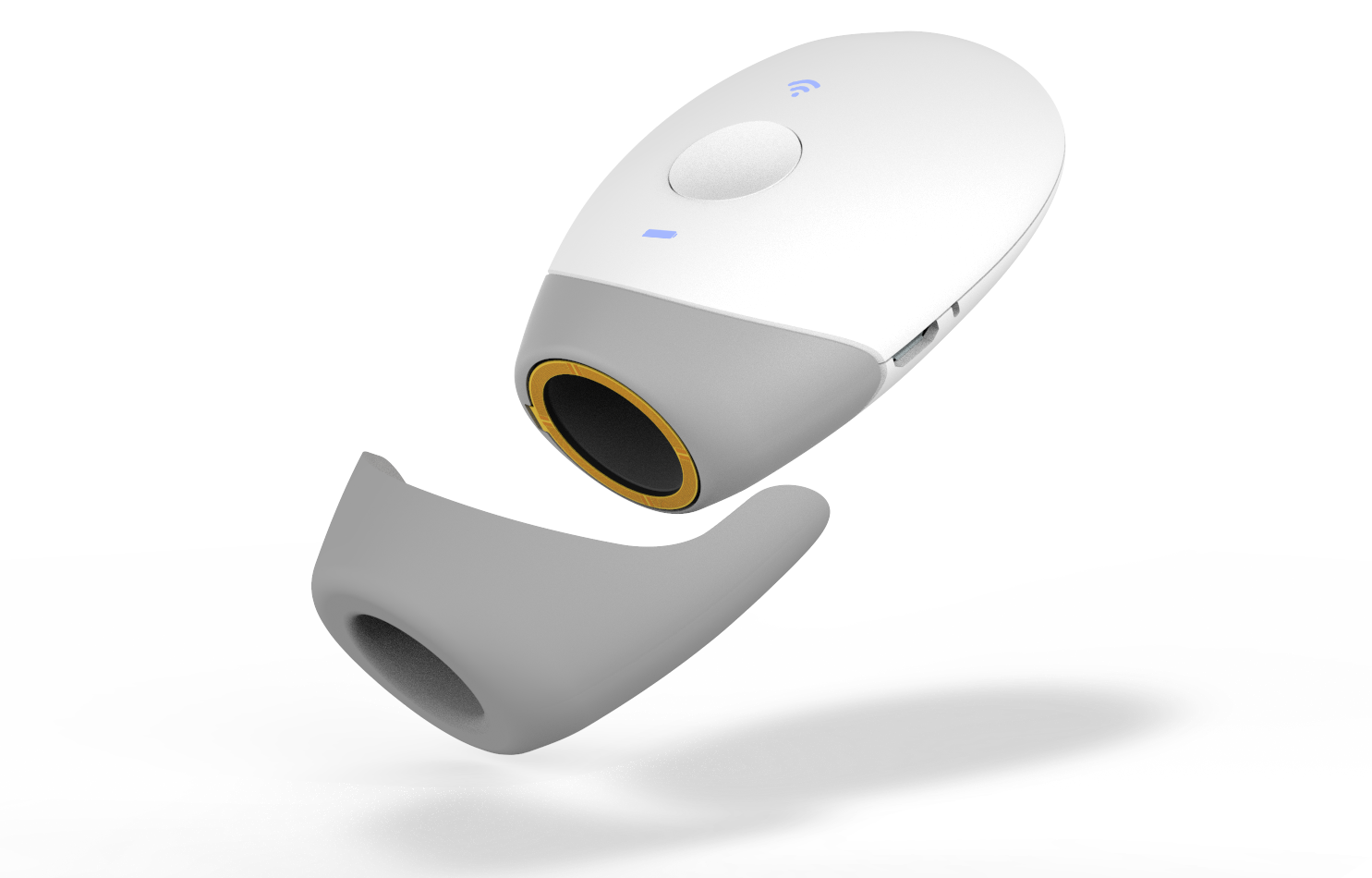
Form studies focus on ergonomics, aesthetics and spatial fit before the internal technology is fully developed. They support stakeholder alignment and user testing while engineering is still evolving. Their value lies in fast learning, so they should be built quickly and economically.
Pre-series prototypes for production validation
Pre-series prototypes use the intended production process or a close approximation. They test whether a product can be reproduced within quality and cost targets, exposing issues such as tooling behaviour, assembly tolerances and material shrinkage before volume production begins.
Rapid prototyping techniques for fast iteration
Modern manufacturing methods make physical validation faster, but the method must follow the test objective. Speed is a means, not an end. Choose the technique that provides the most reliable answer to the current uncertainty.
3D printing for complex geometries
Additive manufacturing is ideal for complex internal structures and organic shapes. For early iterations, rapid product iteration through prototyping offers geometric freedom without tooling costs. Printed parts can behave differently from injection-moulded or machined parts, so use them primarily to test form and fit.
CNC machining for precision and material choice
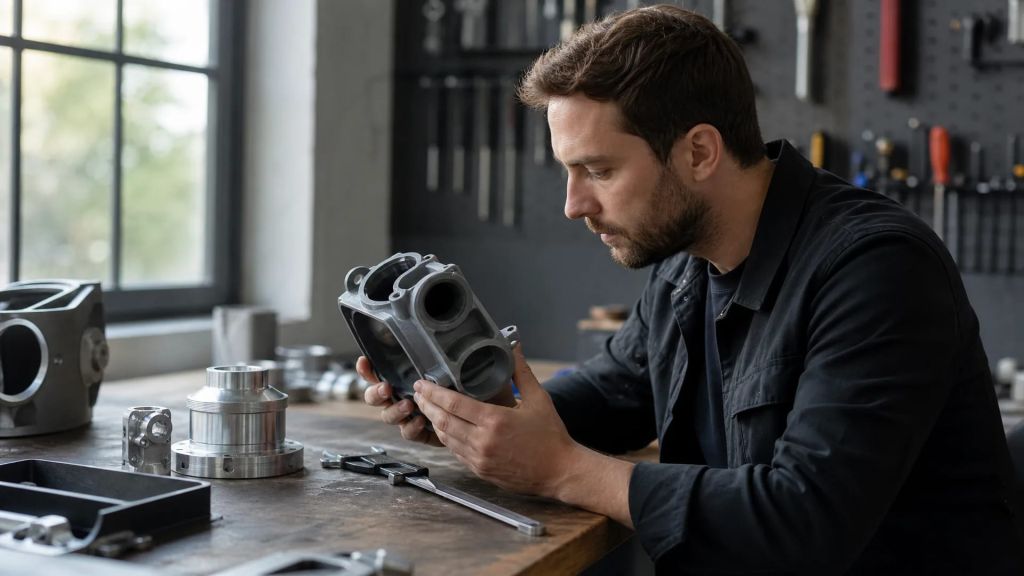
When tolerances, surface finish or specific material properties matter, CNC machining provides precision and allows the same plastics, metals or composites intended for series production. This makes it suitable for mechanically loaded prototypes and parts that must fit existing assemblies.
Vacuum casting and silicone moulds for small batches
For small quantities, vacuum casting and silicone moulds can provide parts with properties close to injection-moulded components without investing in hard tooling. They work well for user trials, market validation and pre-series evaluation.
From prototype to Design for Manufacturing
A prototype that works perfectly but cannot be produced efficiently creates false confidence. Design for Manufacturing translates prototype lessons into a scalable production design and prevents teams from developing a solution that cannot reach the factory floor.
Integrating production requirements
Production constraints should be considered from the first iteration. Our practical Design for Manufacturing guide explains how draft angles, wall thicknesses and tolerances can be integrated without sacrificing functionality. Manufacturability is a design parameter that strengthens innovation.
Material selection and process compatibility
A prototype material must be compatible with the intended series process. A plastic that machines well may be unsuitable for injection moulding because of flow or shrinkage behaviour. Align material specifications and process parameters early and involve plastics engineering expertise from the first material decision.
Cost control through early manufacturability analysis
Costs are largely determined at the drawing board. An early manufacturability review identifies drivers such as unnecessarily tight tolerances, complex undercuts and overengineering before they become embedded in the design.
Multidisciplinary expertise during prototyping
Effective prototyping requires designers, engineers and material specialists to work together. Siloed development often produces something that either looks good or functions well, but does not balance both needs for series production.
Industrial design and engineering working together
For plastic parts, wall thickness and gate location can already determine whether a component can later be injection moulded. Continuous dialogue between industrial designers and engineers keeps form and manufacturability aligned while changes are still affordable.
Plastics expertise for injection-moulded parts
Plastic behaves differently from metal or wood. Challenges such as shrinkage, orientation and residual stress require specialist knowledge. Without it, a prototype may work in a test rig but fail when transferred to production tooling.
Integrating electronics into enclosures
Electronics integration affects thermal management, EMC shielding, assembly order and serviceability. Test working electronics in a representative enclosure so interactions between heat generation and plastic deformation become visible before production.
Prototyping in a structured innovation process
Prototyping delivers the most value in a phased development process with objective decision points. Structure prevents endless tinkering and turns test results into clear progress.
Technology Readiness Levels as a steering tool
The Technology Readiness Level model connects each prototype iteration to a defined maturity stage. It provides a shared language for R&D, management and external partners and helps allocate resources to the right validations.
Iterative validation with stakeholders
Each iteration needs predefined criteria. Involve users, manufacturers and business owners early, with questions appropriate to the current development phase. A step-by-step innovation process connects prototype evidence to broader business goals.
Common prototyping mistakes and how to avoid them
Assessing manufacturability too late
Waiting until after prototyping to review manufacturability is costly because later corrections affect tooling and assembly systems. Involve production specialists from the start.
Underestimating material behaviour
Real material behaviour often differs from data sheets and simulations. Include ageing, chemical resistance and mechanical loads under realistic conditions in the test plan, and treat material selection as a tested variable rather than an assumption.
Missing clear test criteria
Every iteration should begin with a hypothesis and end with a documented conclusion: confirmed or rejected. Clear criteria turn prototypes into evidence and keep decisions out of the realm of opinion.
From insight to result