User Research in Product Development: Steps to a Successful Study
A brilliant product idea remains theoretical until you know whether end users can and want to use it in practice. Innovations rarely fail because the technology is unfeasible; they fail because they solve a problem nobody experiences or because the controls break down in the real world, even though the lab model worked perfectly. User research in product development is therefore not about collecting opinions, but about systematically reducing uncertainty before investing in tooling and series production. Manufacturable innovation only emerges when user insights directly inform technical decisions, material selection and assembly—resulting in a product that is both usable and feasible to produce.
In brief
- Validation replaces assumptions. Internal beliefs about what users want often lead to features that prove irrelevant or unusable in practice. Early observation and testing under realistic conditions—such as gloves, dirt, stress and one-handed operation—produce concrete requirements for the interface, enclosure and electronics. This prevents expensive corrections later: an error costs hours during the concept phase, but weeks and tens of thousands of euros after tooling has been produced.
- Research should accompany every TRL phase. Exploratory research clarifies the problem and its context. Formative testing with rapid prototypes guides design and ergonomics while the product can still be changed. Just before series production, summative validation demonstrates that the design works for the target group and meets safety requirements. Research isolated in a report has no impact; research connected to manufacturability does.
- Insights must become technical specifications. Statements such as ‘it feels cheap’ or ‘it should be easy to clean’ are useless until translated into measurable requirements, such as surface roughness, gap widths, IP rating and grip force. Qualitative context and quantitative measurements together determine material and process choices. For medical devices, usability engineering is also legally required under IEC 62366 and forms part of risk management. The biggest mistakes are starting too late and isolating research from engineers.
A brilliant product idea remains just a theory as long as you don’t know whether the end-user is actually able to and wants to use it in reality. Many innovations fail not because of technical impossibilities, but because they solve a problem that nobody experiences, or because the operation fails in the real world where the lab model still worked perfectly. User research in product development, therefore, is not about collecting opinions, but about systematically removing uncertainty before investing in expensive molds and mass production.
Manufacturable innovation only arises when user insights directly guide technical choices, material selection, and assembly sequence. In this process, research is not an isolated phase that you check off before the kickoff, but a continuous validation stream that flows with every step from concept to physical product. Without this link, you might build a technically perfect device that still fails in the market because it does not align with the physical or cognitive capabilities of the user.
Why user research is the foundation for successful product innovation
Innovation processes often get stuck due to the difference between what stakeholders assume and what users actually do. Teams then spend months working on features that turn out to be irrelevant for the intended application in practice. Assumptions are necessary to start a process, but they should never be the sole basis for final design decisions or investments in tooling. Validated user needs replace speculation with facts and provide the engineering team with a concrete framework to design within.
The difference between assumptions and validated user needs
You base product decisions too often on internal beliefs rather than external evidence. A stakeholder may be convinced that a touchscreen is the right interface, but observations indicate that users wearing gloves need physical buttons. That insight changes the entire electronics architecture and housing design before a single circuit board is ordered. Validation here does not mean asking what people want, but testing what they can actually do under realistic conditions.
Risk reduction in the development process through early validation
The Nielsen Norman Group states that every dollar spent on user research in the early stages saves, on average, ten to a hundred times as much in corrections during production and post-launch. This saving arises from a simple fact: errors in the conceptual phase cost hours, while the same error after mold production results in weeks of delay and tens of thousands of euros in tooling adjustments. Early validation is therefore not an expense, but an insurance against failure costs that exponentially increase as the project progresses.

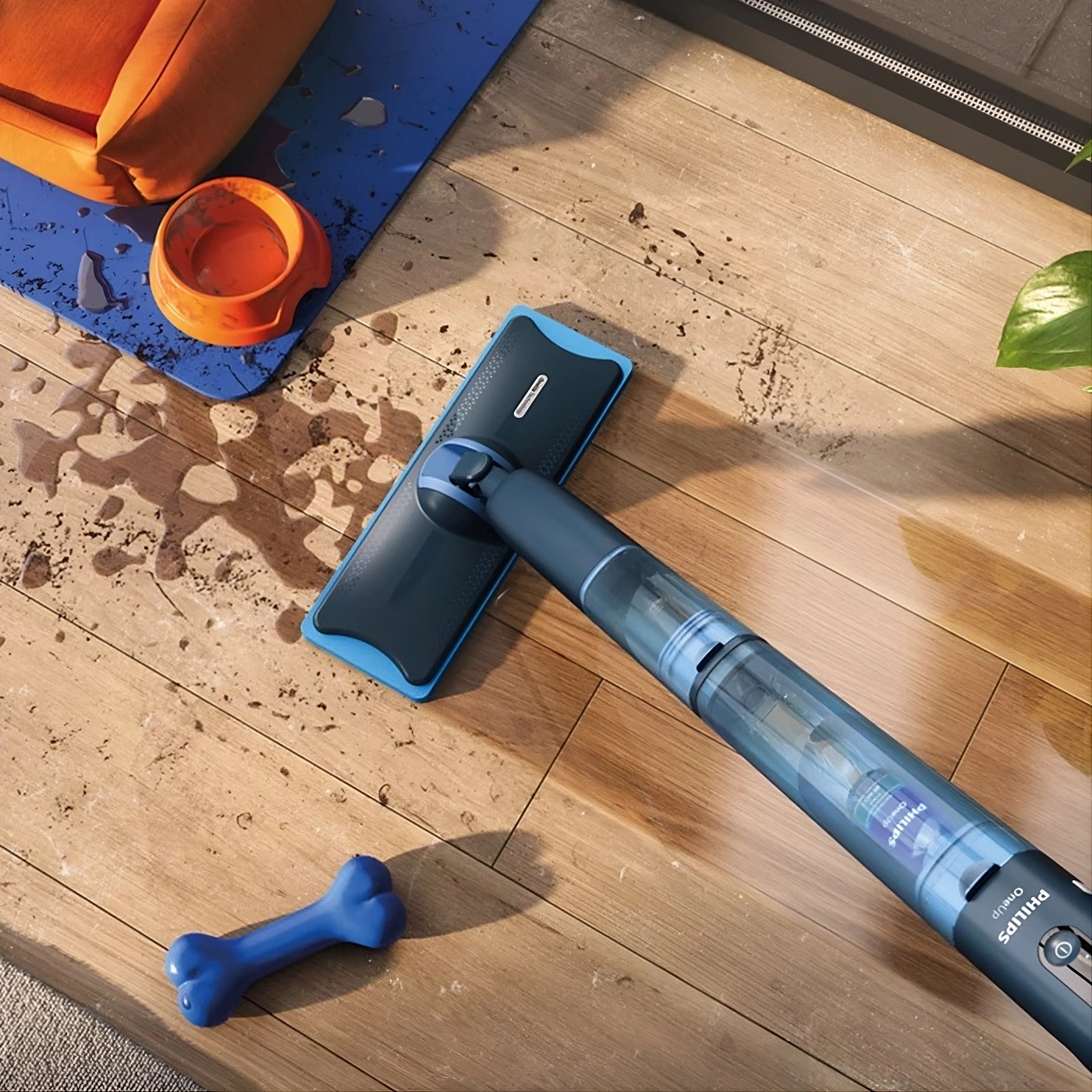
Case: Philips OneUp
Bij de ontwikkeling van een nieuwe generatie vloerreinigers had Philips een duidelijke ambitie: een elektronische dweil die sneller schoonmaakt en gebruiksvriendelijker is dan bestaande oplossingen.
In de praktijk bleek de uitdaging groter. Traditionele dweilen werken met een emmer en hergebruiken hetzelfde water, waardoor vuil zich over de vloer kan verspreiden. Elektrische vloerreinigers lossen dat deels op, maar zijn vaak groot, zwaar en moeilijk te manoeuvreren.
Integrating user research into every stage of product development
Research must progress concurrently with the technical maturity of the product. Each phase addresses specific questions that are directly linked to the Technology Readiness Level scaleand the corresponding decision moments for manufacturability. PEZY integrates user validation as a standard in the Technology Readiness Level trajectory, so that insights regarding operation and ergonomics directly influence the choice between injection molding versus 3D printing for series production. If research is separate from those technical milestones, insights remain stuck in reports without impacting the final product.
Exploratory research during the idea phase and problem definition
In the lowest TRL (Technology Readiness Level) phases, everything revolves around clearly defining the problem and the context. You observe users in their own environment to discover latent needs they would not articulate in an interview. This phase does not yield specifications, but a validated problem statement that prevents you from solving the wrong problem. If you skip this exploration, you risk creating a solution for a symptom rather than the cause.
Formative testing during design and prototyping
Formative research is at the core of the iterative design process and takes place while the product is still under development. Rapid prototypes serve as tangible discussion materials to continuously adjust assumptions about interaction and ergonomics, and in doing so, you userapid prototyping for fast iterationto receive feedback on form, weight, and operation within days. The goal is not perfectionism, but learning: each test result directly feeds into the next design cycle and refines the technical requirements.
Summative validation prior to series production
Summative validation confirms that the final design meets all set usability requirements and safety standards before production starts. This is the moment when you statistically substantiate that the product functions as intended for the entire target audience. Where formative research seeks improvements, summative research seeks evidence of suitability. Without this final check, you enter production with a residual risk that could later lead to recalls or failed certification processes.
Methods that lead to manufacturable designs
Academic rigor does not advance an engineer. Methods should be selected based on their ability to provide direct input for technical specifications and manufacturability optimization within the available time and budgets, and a method is only relevant if its output can be translated into CAD parameters, material properties, or assembly steps. Theoretical models that do not bridge to the drafting table remain dead letter in an innovation trajectory.
Qualitative methods for deep insights into the context of use
Contextual inquiries and task analyses reveal the physical and environmental factors that are crucial for design. You see how factors like light exposure, vibrations, dirt, or stress affect operation in ways that no laboratory test can simulate. This qualitative data directly translates into requirements for surface roughness, grip, contrast ratios, or IP rating. It is precisely these ‘soft’ observations that define the ‘hard’ technical prerequisites.
Quantitative validation for scalability and statistical certainty
When the design is stable, quantitative tests provide the assurance needed for mass production. Measurements of task times, error rates, and force exertion give objective thresholds for tolerances and performance requirements. This data prevents you from over-dimensioning out of caution or under-dimensioning out of optimism, and statistical significance gives management and certifiers the confidence that the product is robust enough for the market.
The combination of data and observation for technical translation
The true value lies in the synthesis of what people say, what they do, and what the sensors measure. A user might report that a handle feels ‘fine’, but force sensors may show that the required gripping force leads to fatigue after twenty minutes. By combining these layers, you achieve an ergonomic design that remains functional even after prolonged use, distinguishing feasible innovation from cosmetic improvements.
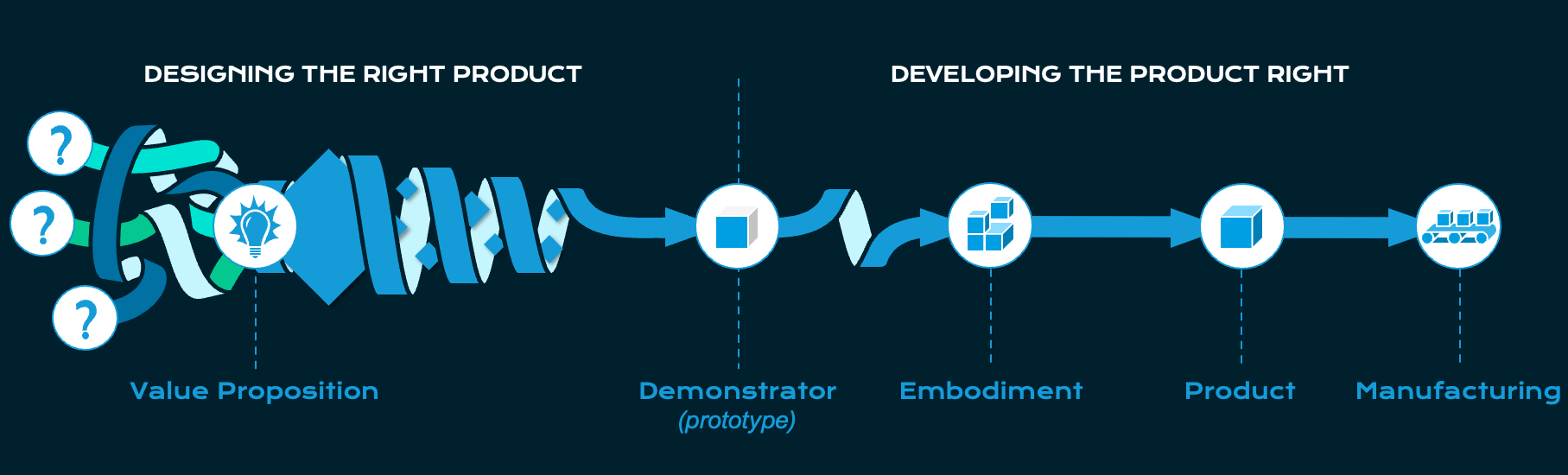
Ons integrale ontwikkeproces
Goede ideeën zijn er genoeg. Succes zit in het vroeg ontwerpen van het juiste product en het daarna ontwikkelen van het product op een manier die betrouwbaar en schaalbaar is. Wij werken integraal, met één team en een lean proces, zodat we sneller leren, risico’s vroeg zichtbaar maken en beslissingen beter onderbouwen. Zo verklein je late wijzigingen, voorkom je kostbare iteraties en maak je de stap naar productie haalbaar, voorspelbaar en beheersbaar.
From user insights to technical specifications and DfM
The crucial step in product development is translating subjective user experiences into objective engineering requirements that can be directly applied in the design process.Design for Manufacturing Guideen de productieplanning. Een opmerking als ‘het apparaat voelt goedkoop’ is waardeloos voor een constructeur, maar vertaald naar ‘oppervlaktemateriaal moet stroeve coating hebben met Ra > 3.2 µm’ wordt het een specificatie. Die vertaalslag vereist dat onderzoekers en engineers dezelfde taal spreken en samenwerken in één team.
Vertaalslag van user needs naar meetbare engineering requirements
Elke gebruikersbehoefte moet eindigen als een verifieerbare parameter in het eisenpakket. ‘Gemakkelijk schoonmaken’ wordt een eis over spleetbreedtes, chemische resistentie en oppervlakte-energie. Zonder die concretisering blijft DfM een vage ambitie in plaats van een meetbaar resultaat, en de engineer kan pas optimaliseren voor productie als hij exact weet welke gebruikseisen hij moet garanderen binnen de matrijsconstraints.
Invloed van gebruiksgedrag op materiaal- en proceskeuze
Bij de ontwikkeling van een draagbare infuuspomp bleek uit contextueel onderzoek dat verpleegkundigen het apparaat vaak met één hand moesten bedienen. Dat leidde tot een complete herziening van de behuizing en knoppenlay-out vóór de matrijsfase. Was dit pas ontdekt na de eerste proefserie, dan was de matrijs onbruikbaar geweest en had het project maanden vertraging opgelopen. Gebruikersgedrag dicteert dus niet alleen de vorm, maar bepaalt mede of je kiest voor spuitgieten, thermoformen of verspaning.
Feedbackloops tussen onderzoek en iteratief ontwerpen
Onderzoek stopt niet bij het eerste prototype, maar loopt door tot de mal gereed is voor productie. Elke iteratie levert nieuwe vragen op die alleen te beantwoorden zijn door opnieuw te testen met aangepaste modellen. Deze cyclus zorgt ervoor dat maakbaarheid en bruikbaarheid parallel evolueren in plaats van sequentieel, en dat voorkomt de klassieke valkuil waarin een perfect getest labmodel in de fabriek onproduceerbaar blijkt.
Specifieke uitdagingen bij regulatoire producten en medische hulpmiddelen
Voor medische en gereguleerde producten is gebruikersonderzoek geen optie, maar een wettelijke verplichting die onlosmakelijk verbonden is met patiëntveiligheid en markttoegang. Volgens de IEC 62366-norm is usability engineering een onlosmakelijk onderdeel van het risicomanagementproces voor medische hulpmiddelen, waarbij gebruiksfouten systematisch geanalyseerd en gemitigeerd moeten worden. Wie dit proces negeert of achteraf probeert te repareren, riskeert niet alleen afwijzing door de notified body, maar brengt ook patiënten in gevaar.
Usability engineering als verplicht onderdeel van risicomanagement
Usability-onderzoek valt bij medische hulpmiddelen samen met veiligheidsvalidatie en moet vroeg in het traject gebeuren om dure hercertificering te voorkomen. Gebruiksfouten worden behandeld als potentiële gevaren die net zo zwaar wegen als elektrische veiligheid of biocompatibiliteit. Dat betekent dat je al in de conceptfase moet aantonen dat je gebruiksfouten hebt geïdentificeerd en beheerst via designmaatregelen. Meer over deze specifieke eisen vind je in onze toelichting opproductontwerp voor medische hulpmiddelen.
Documentatie-eisen voor validatie volgens IEC 62366
De norm eist een traceerbaar dossier dat de link legt tussen bekende hazards, usability requirements, validatietests en resterende risico’s. Elk testrapport moet terug te voeren zijn naar een specifiek risico in het risicomanagementdossier. Ontbreekt die traceerbaarheid, dan telt het onderzoek niet mee voor certificering, hoe grondig het ook is uitgevoerd. Documentatie is hier geen administratieve last, maar het bewijsmiddel dat veiligheid is ontworpen en niet slechts getest.
Veelgemaakte fouten bij gebruikersonderzoek in productteams
Zelfs teams met goede intenties maken fouten die leiden tot mooie rapporten maar geen beter product. Vaak komt dat doordat teams onderzoek behandelen als een externe dienst in plaats van een kerncompetentie van het ontwikkelteam. De meest schadelijke fout is onderzoek isoleren van de technische realiteit, waardoor inzichten nooit landen in het CAD-model of de productieplanning. Maakbaarheid vereist dat onderzoek en engineering samenvallen in tijd, ruimte en verantwoordelijkheid.
Te laat starten met valideren in het ontwikkelproces
Teams wachten vaak tot er een werkend prototype is voordat ze gebruikers betrekken, uit angst voor negatieve feedback of omdat ze eerst de techniek ‘rond’ willen hebben. Dit uitstel maakt validatie duur en pijnlijk, want fundamentele wijzigingen betekenen dan dat eerdere engineering-inspanningen verloren gaan. Valideer liever ruwe concepten met low-fi mockups dan verfijnde prototypes met hoge sunk costs. Vroege feedback is goedkoop; late feedback is een crisis.
Onderzoek isoleren van het technische team
Presenteren onderzoekers hun bevindingen in een aparte sessie zonder dat engineers aanwezig zijn of betrokken worden bij de analyse, dan verdwijnt de nuance in de overdracht. Engineers moeten zelf zien hoe een gebruiker worstelt met een mechanisme om de urgentie van een ontwerpwijziging te voelen. Integreer onderzoek daarom in het dagelijkse ontwikkelritme en zorg dat inzichten direct besproken worden in de technische review. Alleen dan wordt onderzoek een stuwend instrument in plaats van een retrospectief verslag.
Samenwerking met een productontwikkelaar: onderzoek als integraal onderdeel
Gebruikersonderzoek levert pas echt rendement wanneer het ingebed is in een end-to-end ontwikkeltraject waarin design, engineering en productie vanaf dag één samenwerken. In een gefragmenteerd proces verdrinken inzichten in overdrachtsmomenten tussen bureaus en leveranciers, terwijl een geïntegreerde partner zoals PEZY zorgt dat elke observatie direct landt in het technische ontwerp en de productieplanning. Deze samenhang is geen luxe, maar een noodzaak voor complexe fysieke producten waar gebruikservaring en maakbaarheid onlosmakelijk verbonden zijn.
Dit onderzoek is echter geen universele oplossing voor elk bedrijfsprobleem. Het valideert de interactie tussen mens en product, maar lost geen strategische marktpositionering of businessmodel-vraagstukken op. Teams die vastlopen in aannames over hun productconcept vinden in eenBreak-through Sessioneen gestructureerd startpunt om deze aannames te toetsen voordat het volledige ontwikkelingstraject begint.
From insight to result